
Huzzah! 🥳
One of our garden's superstars returned today after an absence of three months.
This tachnid is a female Dexia vacua – so rare in central & western Europe that it was thought extinct until recently.
This is the third I've seen here this year, making me the world's leading observer on iNaturalist 🙂
#Heidelberg 🏰
#Photography 📷️️️️️️️️️️️️️️️️️️️️️️️️️️️️️️️️️️️️️️️️️️️️️️️️️️️️️️️️️️️️️️️️️️️️️️️️️️️️️️️️️️️️️️️️️️️️️️️️️️️️️️️️️️️️️️️️️️️️️️️️️️️️️️️️️️️️️️️️️️️️️️️️️️️️️️️
#BugOfTheDay 🐞
#MacroPhotography 🔬
#InsectsOfMastodon 🪰
#BackGardenEntomology 🪲
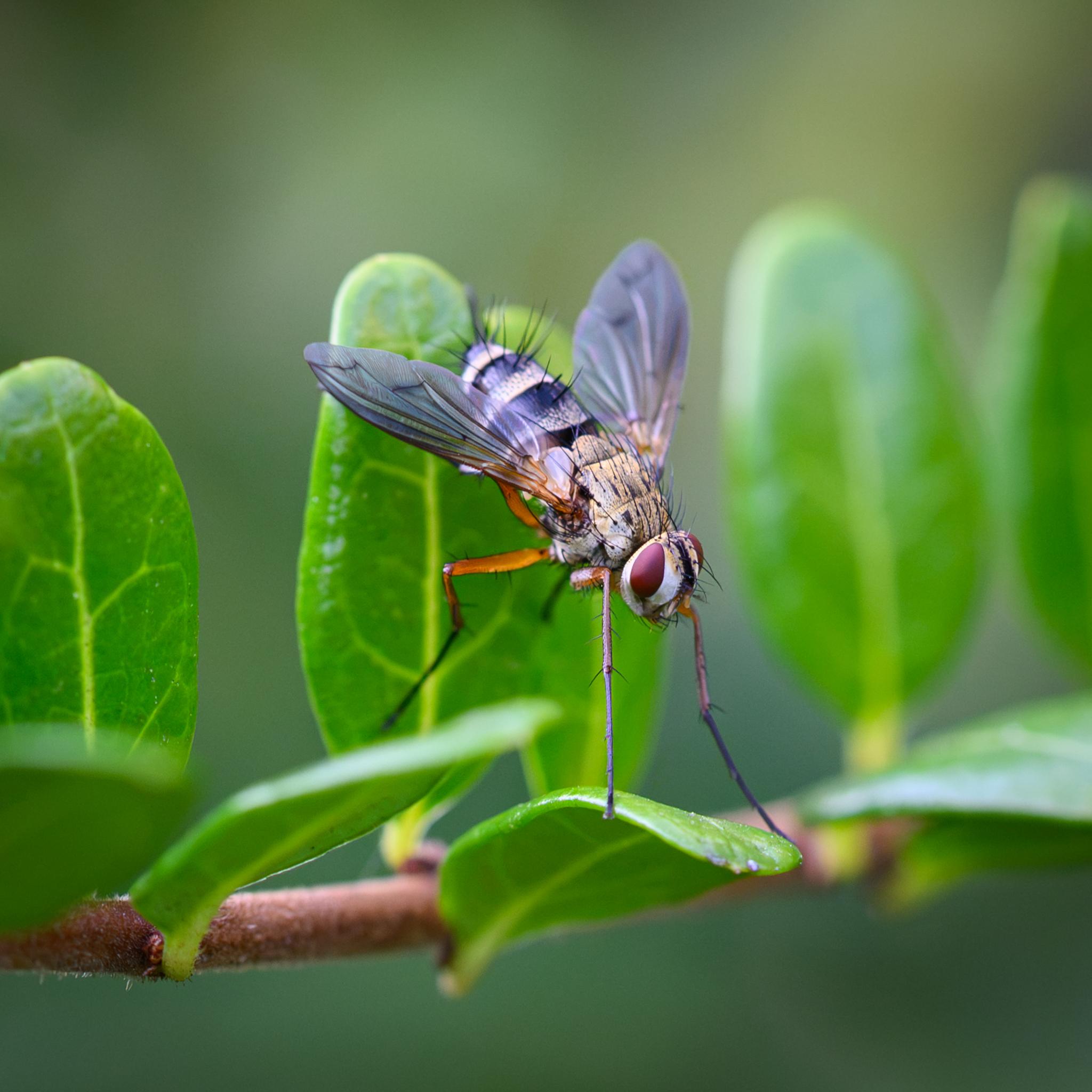
FWIW, it's fairly easy to confuse D. vacua with the more common Dexiosoma caninum.
But there are several key differences in where black bristles are found (or not) on the thorax & abdomen, along with differences in the lengths of key wing veins.
This specimen clearly meets the conditions for being a female Dexia vacua.
For more insight on the specific differences, this is a great resource:
https://tachinidae.org.uk/blog/dexiosoma-caninum-vs-dexia-vacua/