Vai al contenuto principale

← Torna al post

After a day of welcome rain, there was little to see in the garden this evening.

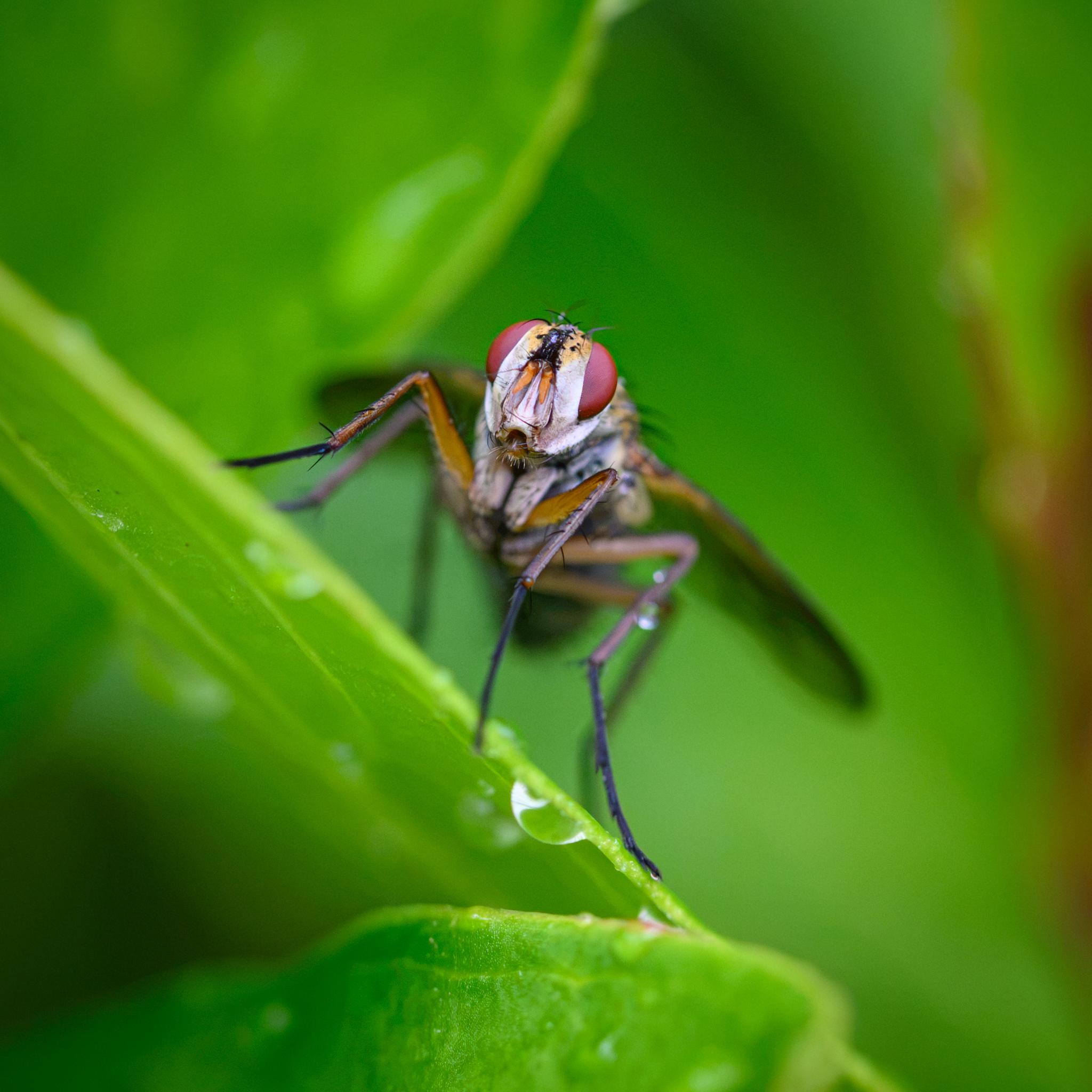
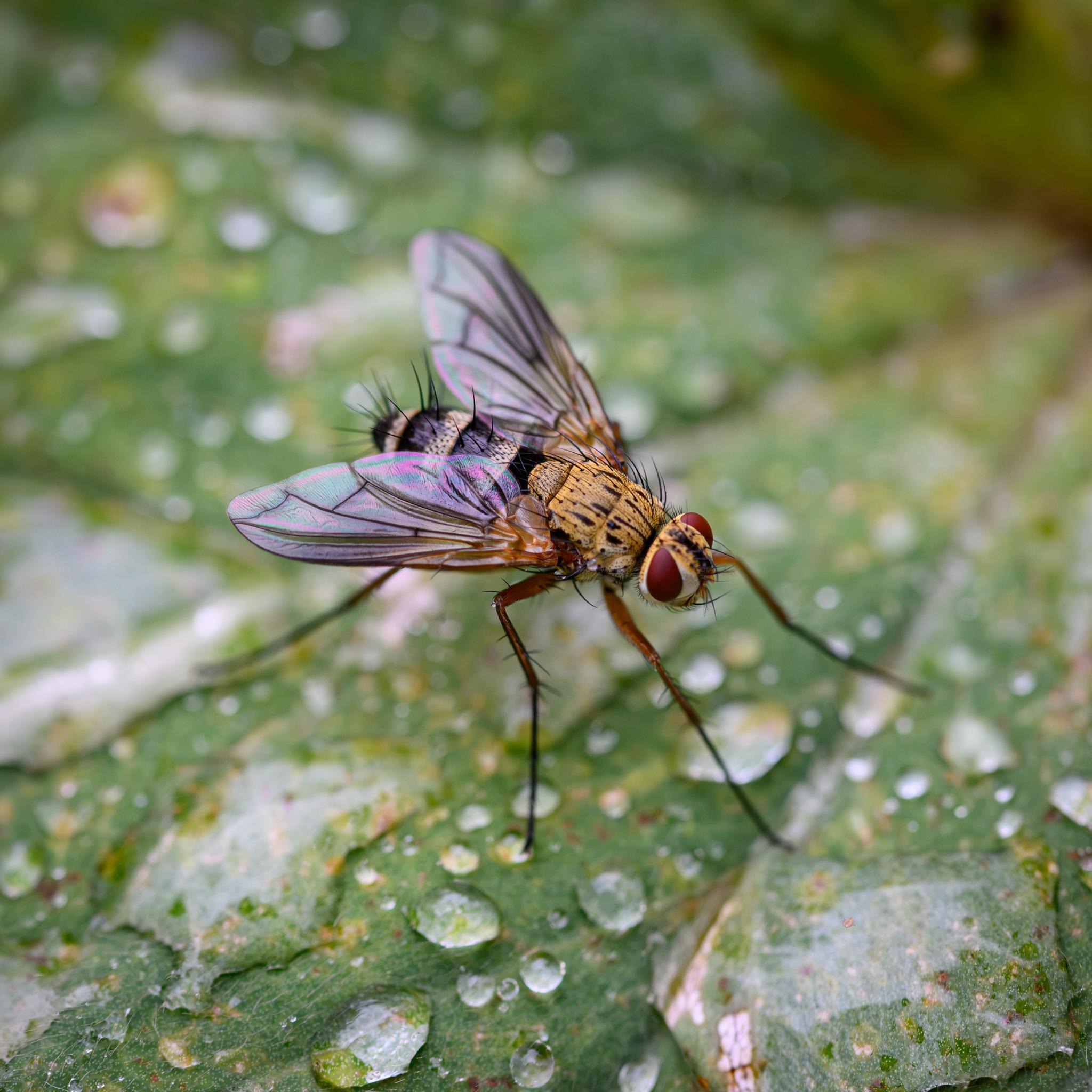
Except one of the rarest European flies – a female Dexia vacua, braving the drizzle 🙂

Likely the same one I saw yesterday & in a slightly awkward place, so not easy to set up the tripod. But good enough pictures to confirm the ID 👍

🏰
📷️️️️️️️️️️️️️️️️️️️️️️️️️️️️️️️️️️️️️️️️️️️️️️️️️️️️️️️️️️️️️️️️️️️️️️️️️️️️️️️️️️️️️️️️️️️️️️️️️️️️️️️️️️️️️️️️️️️️️️️️️️️️️️️️️️️️️️️️️️️️️️️️️️️️️️️️
🐞
🔬
🪰
🪲

A fly seen from above on a wet green leaf. The head and thorax of the fly are yellow-brown with many short and long black hairs and bristles. There is a wide gap between the brick red compound eyes, with a black central channel and bristles crossing over. The thorax has a pair of thin black stripes extending almost to the suture (the depression one third along) and importantly for the ID, there are black acrostichal bristles in that first region on the top of the thorax. There are more black patches and bristles further back, including on the scutellum. The abdomen is banded with black and then grey parts on each tergite. The grey regions have many fine black hairs and some strong bristles. Better seen in other pictures are the median discal bristles, along the top of the tergites, but not at the back edge. That again is a key marker of Dexia vacua. There are strong bristles at the rear of the abdomen. The wings are clear grey, turning amber near the roots. The median vein extends furt The same fly on a different green leaf, with water droplets on it. The fly is seen in half profile, showing the head, eyes, and thorax in good detail. The legs are brown with short black hairs and longer black bristles, turning darker lower down. A view from the front, showing the face with the broad yellow-brown patch between the eyes and the central black channel. There are black bristles crossing over that part. The face turns white below, with orange antennae and white hairs around the mouth. The top two parts of the front legs are amber, with the last segment black. A view from in front, the side, and above, on yet another leaf, covered in water droplets. The acrostichal bristles in the pre-sutural part of the thorax are visible, as are the median discal bristles on tergites 2 and 3, again both clear markers of Dexia vacua as opposed to Dexiosoma caninum. The median vein on the wings is another diagnostic: the part beyond the orthogonal m-cu vein is longer than the remaining distance beyond it to the wing edge, and the vein extends beyond the bend.

#photography #macrophotography #bugoftheday #heidelberg #insectsofmastodon #backgardenentomology

20

Caricamento...

2
9

Caricamento...

One other thing willing to brave the rain though was this large garden snail (Cornu aspersum; 🇩🇪 Gefleckte Weinbergschnecke).

Not an arthropod, but an invertebrate at least.

When I returned after photographing the Dexia vacua fly, it had moved over to feast on some rotting figs that had fallen on the ground.

🏰
📷️️️️️️️️️️️️️️️️️️️️️️️️️️️️️️️️️️️️️️️️️️️️️️️️️️️️️️️️️️️️️️️️️️️️️️️️️️️️️️️️️️️️️️️️️️️️️️️️️️️️️️️️️️️️️️️️️️️️️️️️️️️️️️️️️️️️️️️️️️️️️️️️️️️️️️️️️
🐞
🔬
🪰
🪲

A large snail crawling over our parched garden grass. The snail's shell is dark brown with lighter brown patches and a stripe along the top, while the soft body is grey and wrinkly.
0