
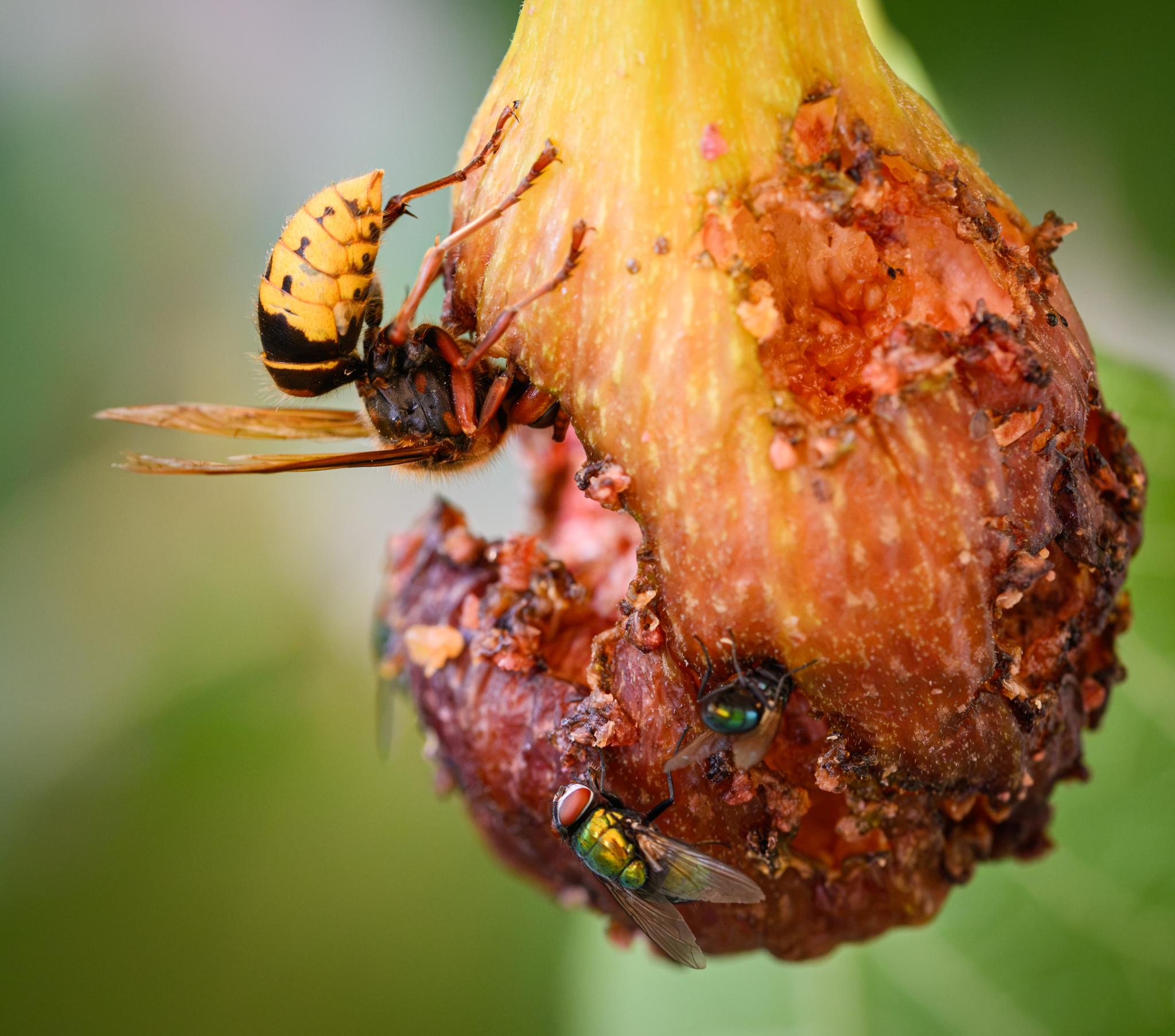
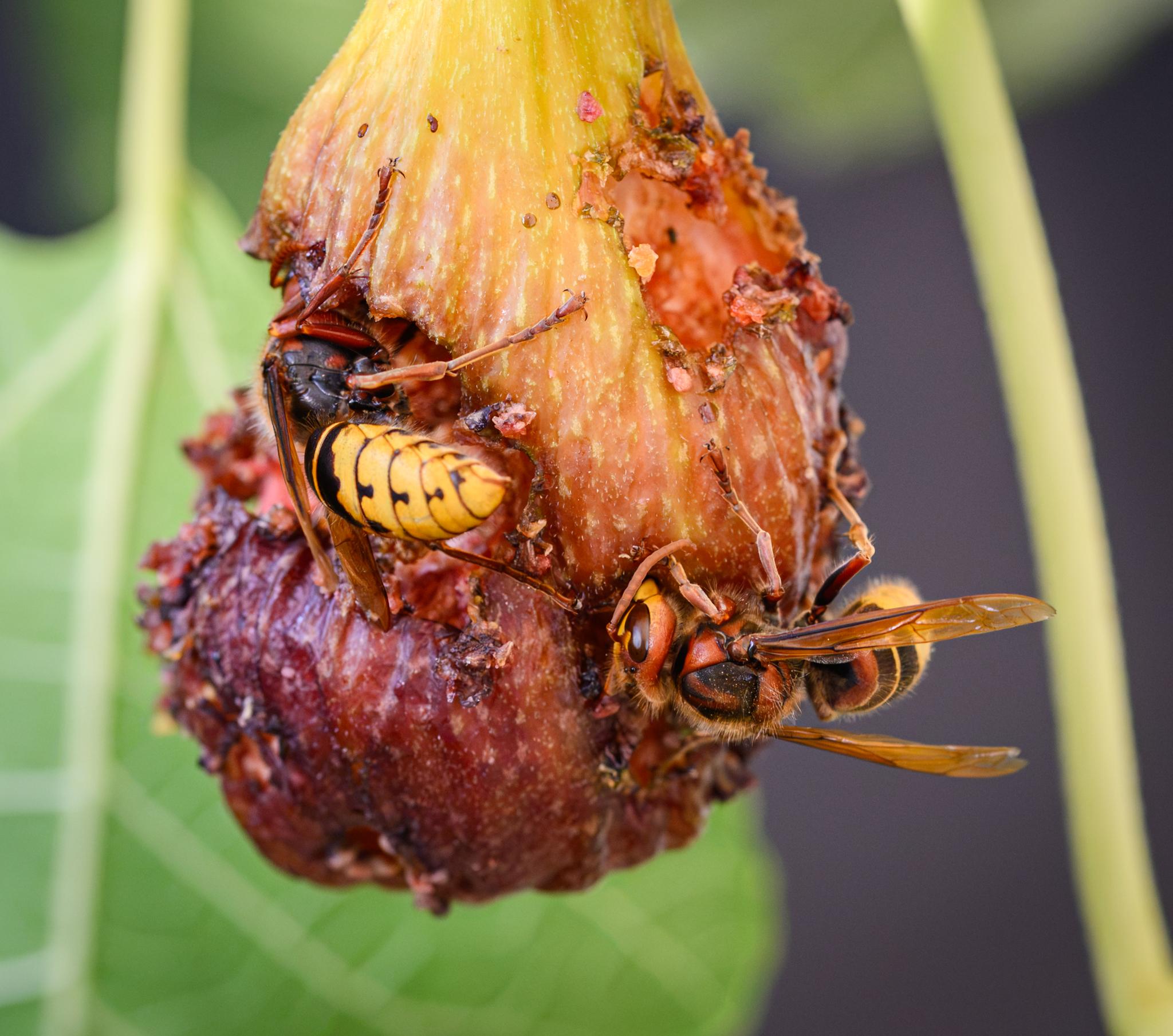
Some rather better pictures of the European hornets (Vespa crabro; 🇩🇪 Hornisse) feeding on our figs this evening.
These two were slightly different in size, but I'm not expert enough to distinguish between queens, workers, & males.
BTW, hornets are strictly protected in Germany, so they're welcome to the figs 🤷♂️🙂
#Heidelberg 🏰
#Photography 📷️️️️️️️️️️️️️️️️️️️️️️️️️️️️️️️️️️️️️️️️️️️️️️️️️️️️️️️️️️️️️️️️️️️️️️️️️️️️️️️️️️️️️️️️️️️️️️️️️️️️️️️️️️️️️️️️️️️️️️️️️️️️️️️️️️️️️️️️️️️️️️️️️️️️️️
#BugOfTheDay 🐞
#MacroPhotography 🔬
#InsectsOfMastodon 🪰
#BackGardenEntomology 🪲
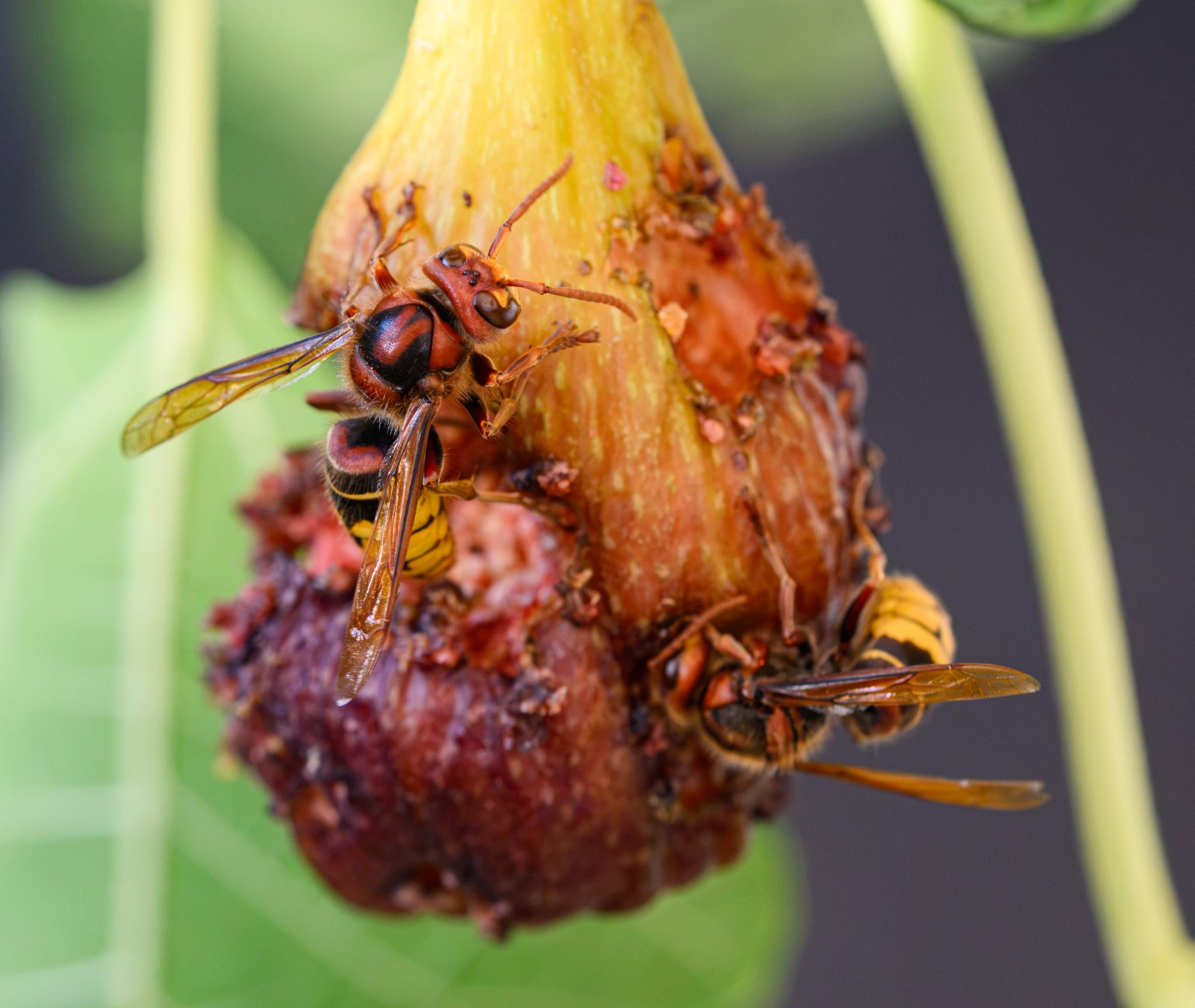
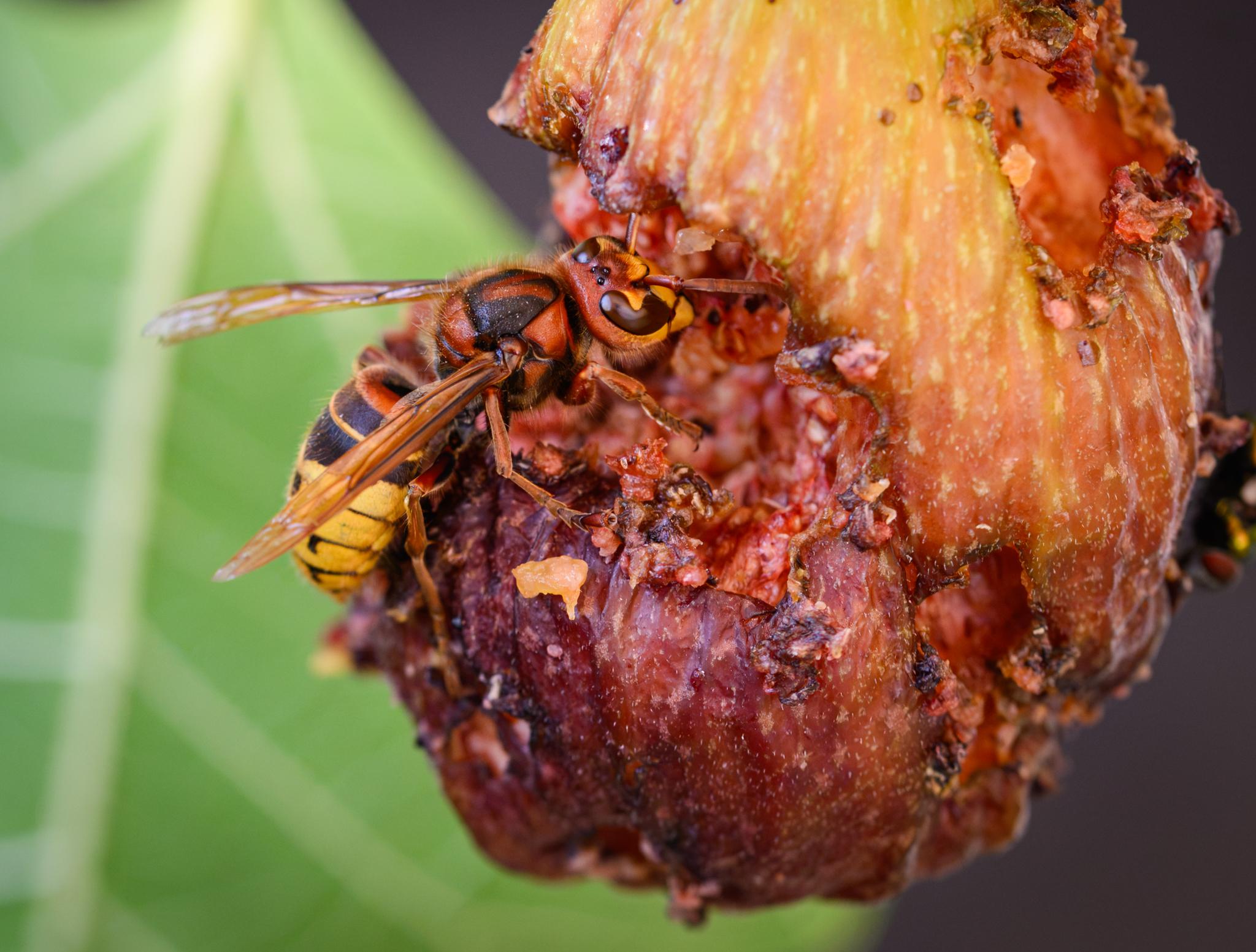
Historically, the strong V seen on the thorax of these hornets would have led them to be identified as the sub-species Vespa crabro germana.
Other colour forms are seen across Europe & used to have names such as Vespa crabro crabo or Vespa crabro vexator.
However, it's now thought that there's little genetic basis for that, & that all of the different forms belong to a single polymorphic species.