Vai al contenuto principale

Yet again, little garden action in the high & dry heat, but still some new species as summer drags on.

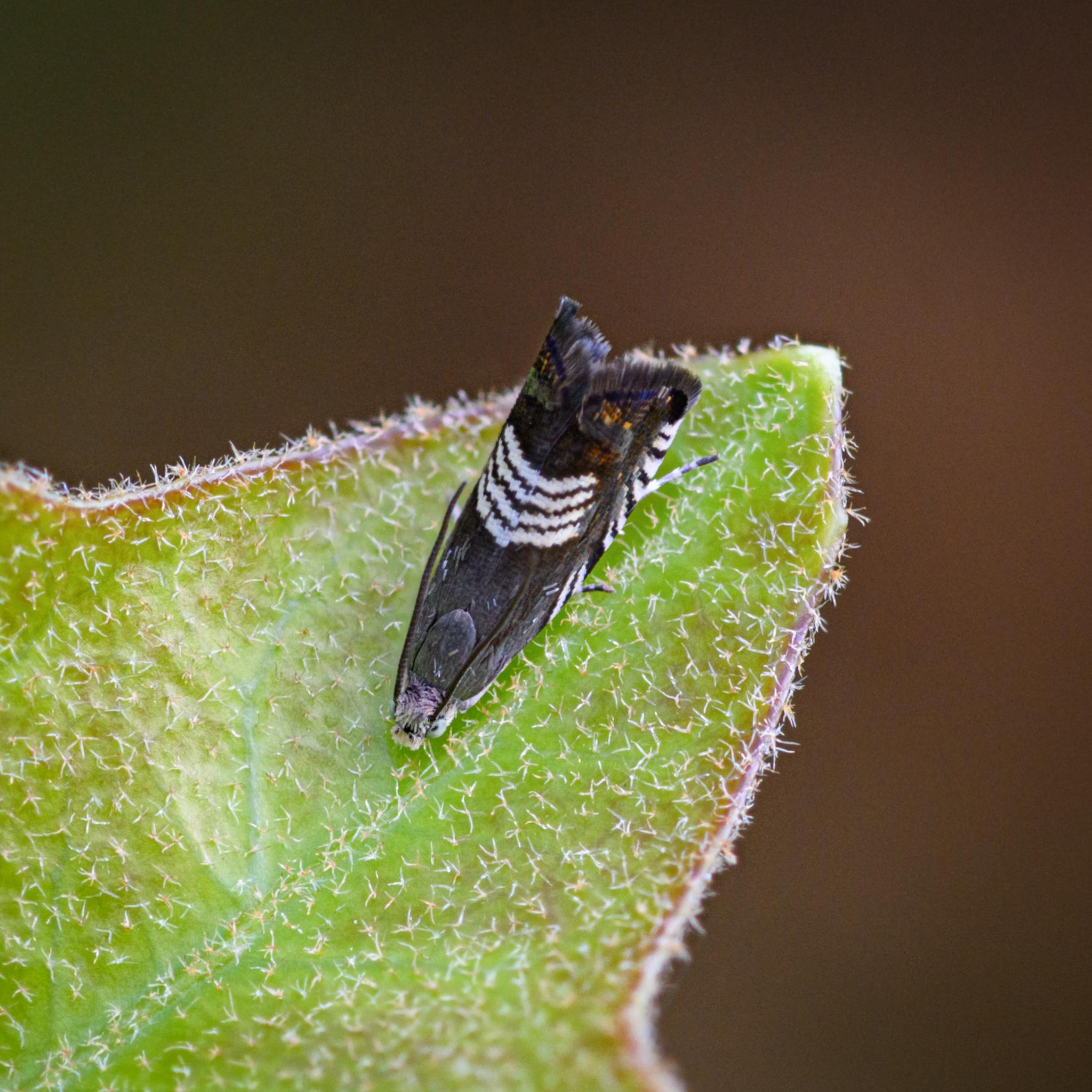
First, a rather pretty small tortrix, the clover seed moth (Graphitola compositella; 🇩🇪 Kleewickler).

The white stripes on dark grey first catch the eye, but the subtle iridescence at the back is nice too.

🏰
📷️️️️️️️️️️️️️️️️️️️️️️️️️️️️️️️️️️️️️️️️️️️️️️️️️️️️️️️️️️️️️️️️️️️️️️️️️️️️️️️️️️️️️️️️️️️️️️️️️️️️️️️️️️️️️️️️️️️️️️️️️️️️️️️️️️️️️️️️️️️️️️️️️️️️️
🐞
🔬
🪰
🪲

A small moth seen from above on a green leaf with lots of small white spines. The moth has its wings folded back and the overall colour is a dark grey. The eyes are grey blue and there is lilac fluff between them, with a white beard below. There are four strong white stripes curving across the mid-wings of the moth, with other diagonal white stripes below. There are some flashes of blue, gold, and green at the rear of the wings before the frilly end. The legs are black and white and the antennae dark grey.

#photography #macrophotography #bugoftheday #heidelberg #insectsofmastodon #backgardenentomology

48

Caricamento...

6
17

Caricamento...

Commenti (6)

And on a rather larger scale, this European hornet (Vespa crabro; 🇩🇪 Hornisse) was gracious enough to allow me a few poor shots before it continued its high-speed patrol of the rotting figs on our tree.

I've been having four a day with my breakfast & just can't keep up 😱

🏰
📷️️️️️️️️️️️️️️️️️️️️️️️️️️️️️️️️️️️️️️️️️️️️️️️️️️️️️️️️️️️️️️️️️️️️️️️️️️️️️️️️️️️️️️️️️️️️️️️️️️️️️️️️️️️️️️️️️️️️️️️️️️️️️️️️️️️️️️️️️️️️️️️️️️️️️️
🐞
🔬
🪰
🪲

A large hornet seen head and side on feeding from a decaying fig. The hornet has large brown compound eyes with an irregular peanut shape on its face. The latter is yellow lower down, rosy pink above, with small black ocelli. The thorax of the hornet is black and pink, while the thorax is patterned yellow and black, but not well seen from this angle. The antennae are orange-yellow. The same hornet seen more side-on, showing the pink and black thorax with fine hairs well, along with a side on view of the yellow and black abdomen. The wings are amber clear. The same hornet now turned away from the camera, showing the abdomen in more detail, with its black "paint drips" extending down into the yellow bands on each tergite. The legs are well seen in this picture and are a rusty red-brown.
0

@markmccaughrean@mastodon.social For all these creatures to exist, we have to protect our planet first.
There are some places which do not have bees,beetles, ants and other varieties of insects and animals due to changes in the climate.

0

@markmccaughrean@mastodon.social

Feel lucky about your hornets. With the temperatures so high in France, I haven't seen ANY this year.
In fact I see a lot less insects than usual. It's sad.

0

@markmccaughrean@mastodon.social
the attention lies on the upper end, the end of the wings. so if and when a bird snaps to the moth, it gets only the wings's ends. not so dangerous for the little moth.

0