Vai al contenuto principale

Another cloudy & rainy day, somewhat unpromising for arthropod hunting.

But don't judge a book by its cover – there were indeed some interesting things to see in the garden.

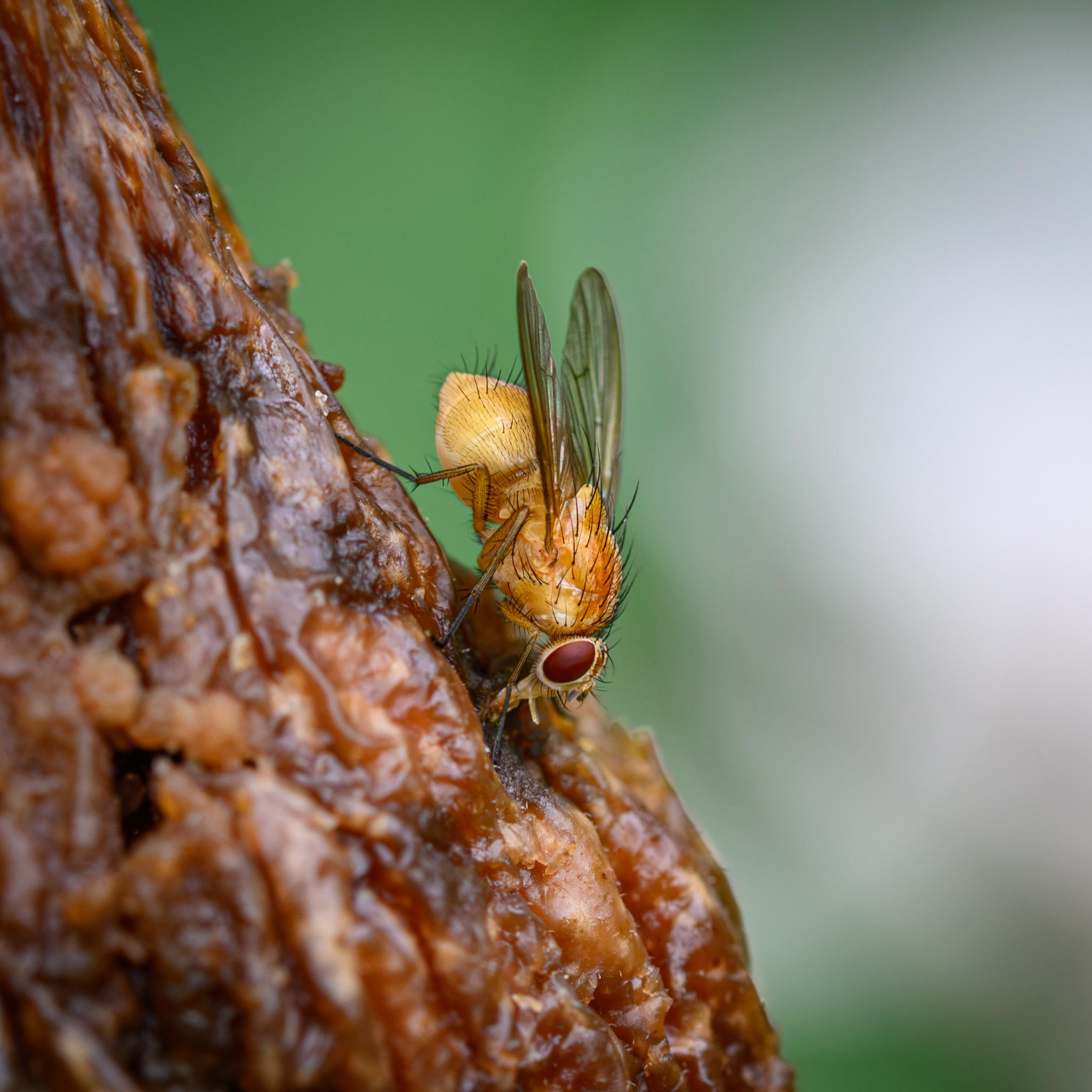
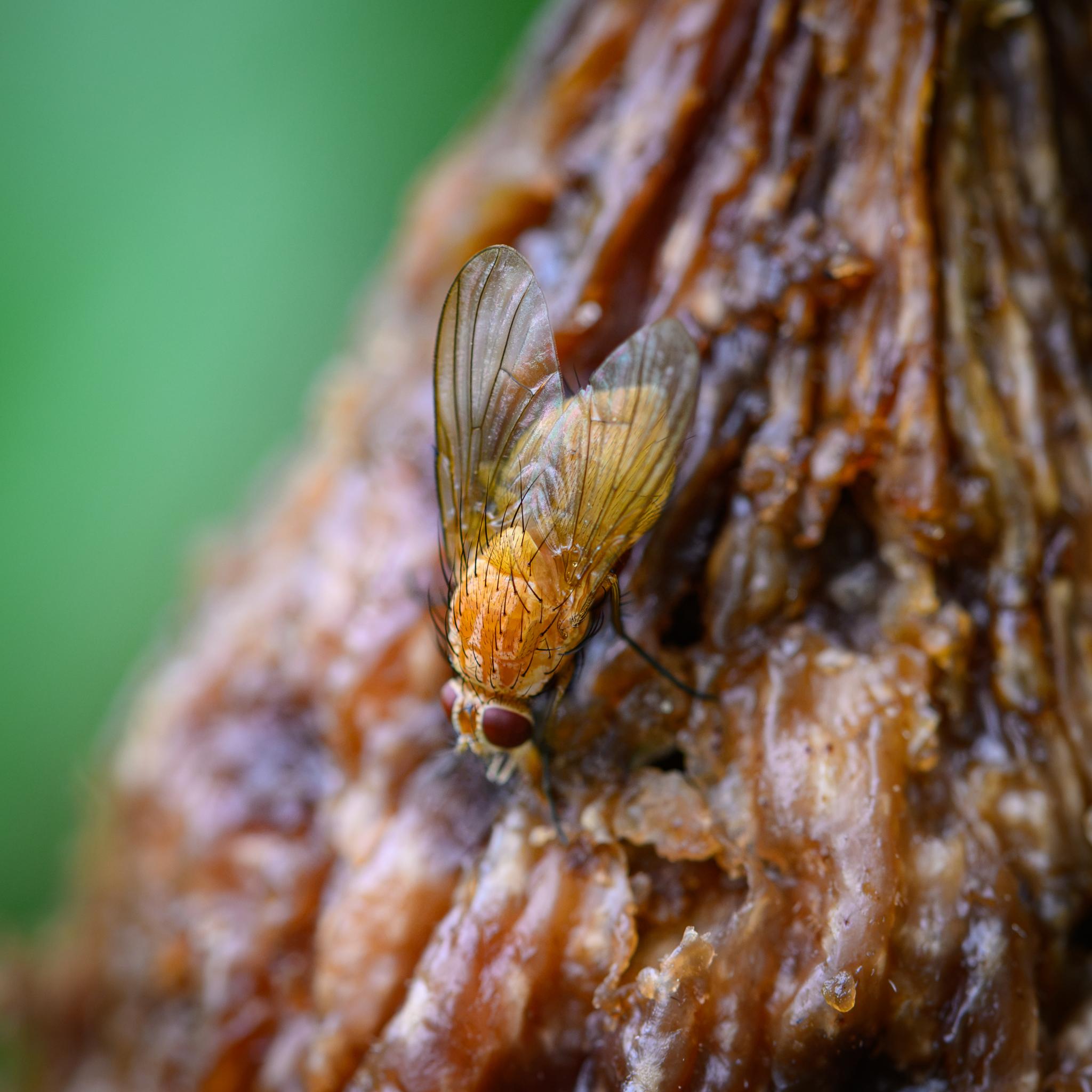
Starting with this chonk feeding on the remains of the figs: it's a female orange muscid fly (Phaonia pallida; 🇩🇪 Helle Hausfliege).

🏰
📷️️️️️️️️️️️️️️️️️️️️️️️️️️️️️️️️️️️️️️️️️️️️️️️️️️️️️️️️️️️️️️️️️️️️️️️️️️️️️️️️️️️️️️️️️️️️️️️️️️️️️️️️️️️️️️️️️️️️️️️️️️️️️️️️️️️️️️️️️️️️️️️️️️️️️️️️️
🐞
🔬
🪰
🪲

fly seen mostly side on, feeding from a brown decaying fig. The fly is a pale yellow, darkening to orange on the top of the thorax, and lighter towards the end of the fat abdomen. The fly has red compound eyes and is covered in a mix of fine black hairs and stronger black bristles. The legs are darker grey-orange, also with bristles, while the wings are clear grey. The fly's mouth is extended into the fig. The same fly seen more from above, showing a pattern of interwoven orange and pale yellow stripes along the top of the thorax, and also showing the wing venation nicely on the left-hand wing. The compound eyes are well separated, marking this as a female.

#photography #macrophotography #bugoftheday #heidelberg #insectsofmastodon #backgardenentomology

17

Caricamento...

1
5

Caricamento...

Commenti (1)

Another new chunky fly for this year is Minettia fasciata, in the Lauxaniid family.

Widespread across Europe, but not that frequent, which might explain why it doesn't have a common name in English or German.

It's also not a single species, but rather a complex, which are difficult to ID individually.

🏰
📷️️️️️️️️️️️️️️️️️️️️️️️️️️️️️️️️️️️️️️️️️️️️️️️️️️️️️️️️️️️️️️️️️️️️️️️️️️️️️️️️️️️️️️️️️️️️️️️️️️️️️️️️️️️️️️️️️️️️️️️️️️️️️️️️️️️️️️️️️️️️️️️️️️️️️️️️️️
🐞
🔬
🪰
🪲

A medium-sized fly seen side on, sitting on a green leaf that has a red edge and red points. The fly has a brownish head with light mahogany antennae and brick red compound eyes, with a diffuse black spot in the centre. The latter are widely separated by a light brown section with several pairs of strong black bristles. The thorax is a mix of grey and light brown, again with many black bristles. The abdomen is fat and much lighter, with a series of dark brown lateral stripes on top. The underside is lighter again. The legs are dark brown, and the wings look to be grey clear with some iridescence. The fly is cleaning its wings with its hind legs.
0