Vai al contenuto principale

Well.

I wasn't planning on arthropod hunting in today's renewed hot & muggy weather 🥵

But old habits etc., so I went out with just my phone. Saw & snapped this pretty thing, then returned with the big camera.

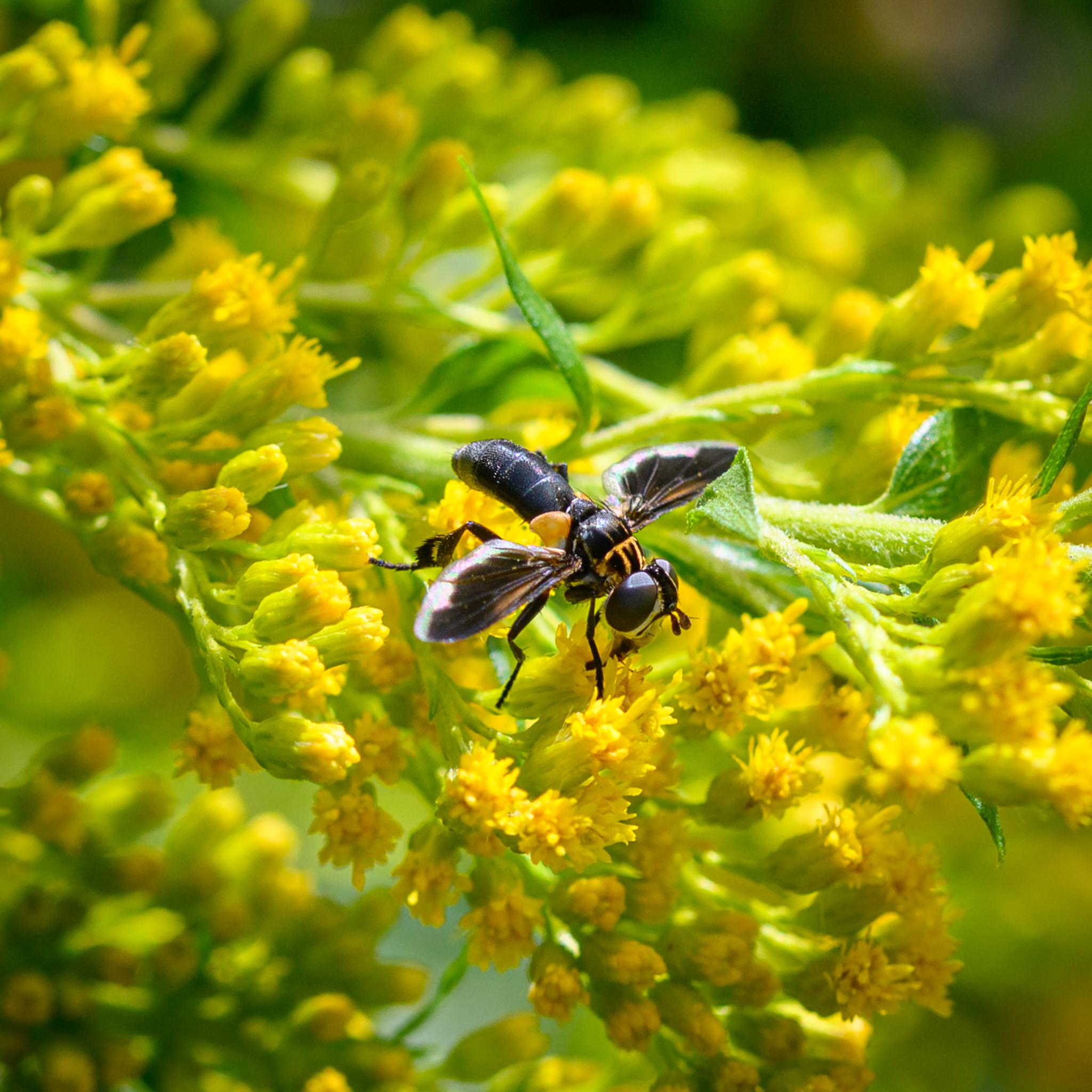
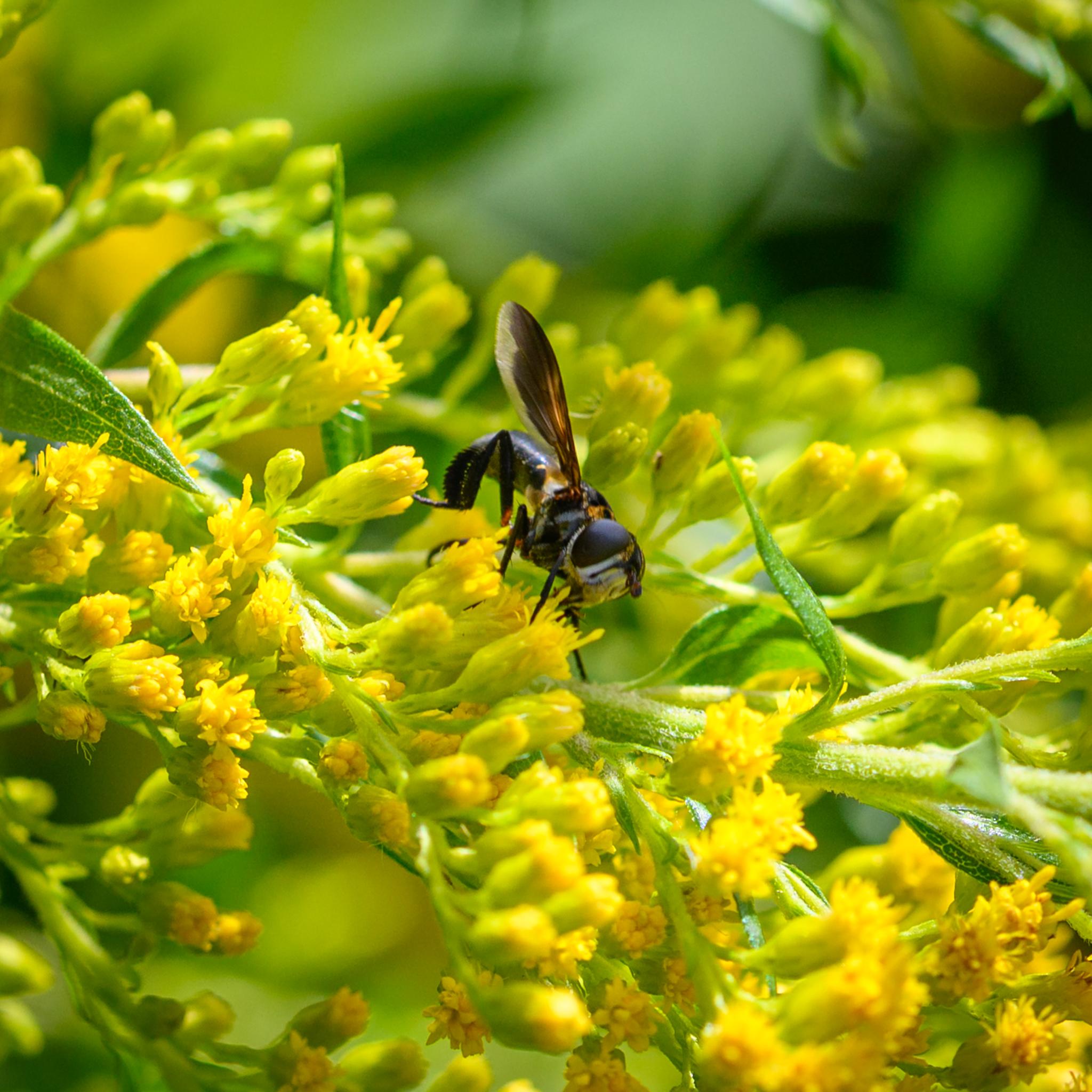
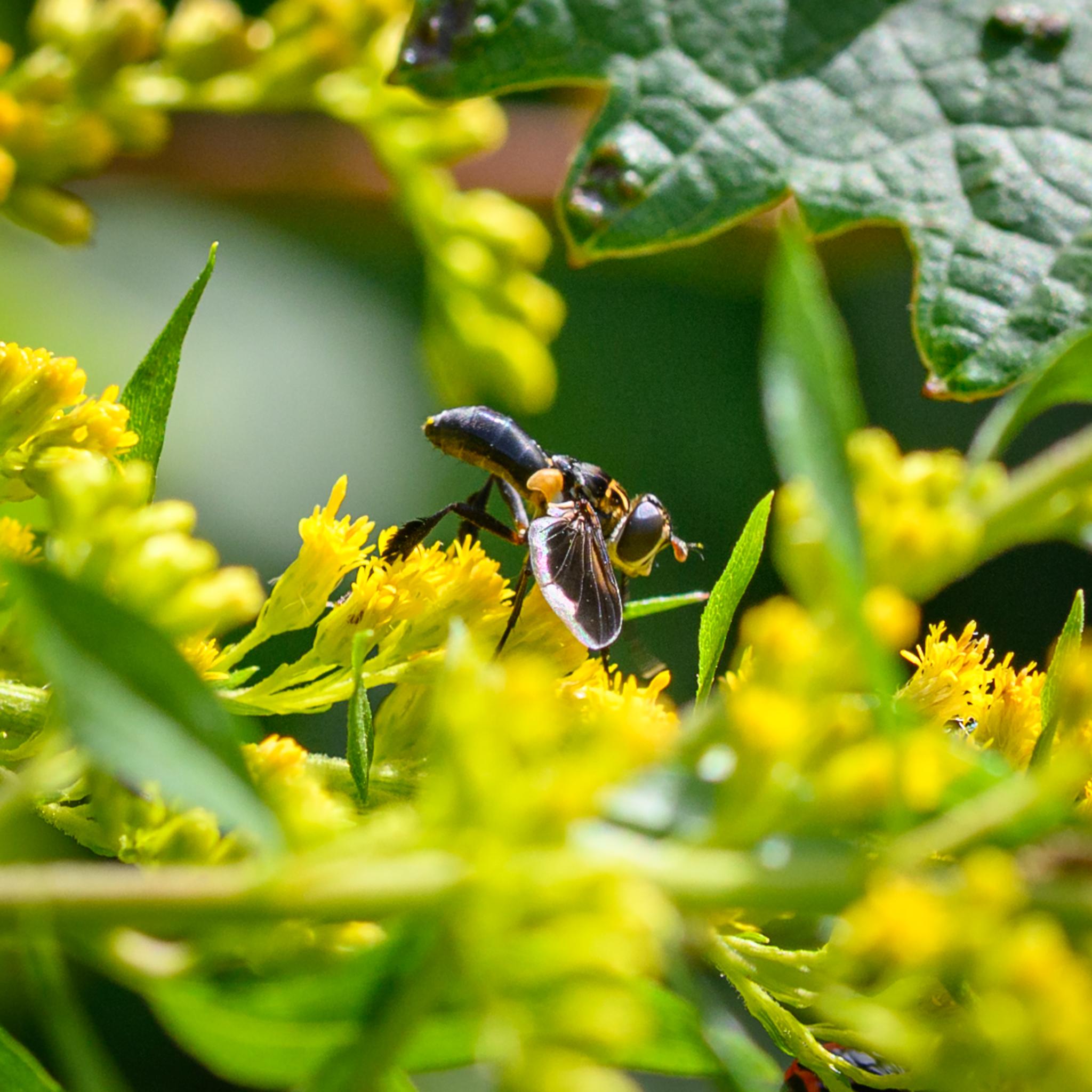
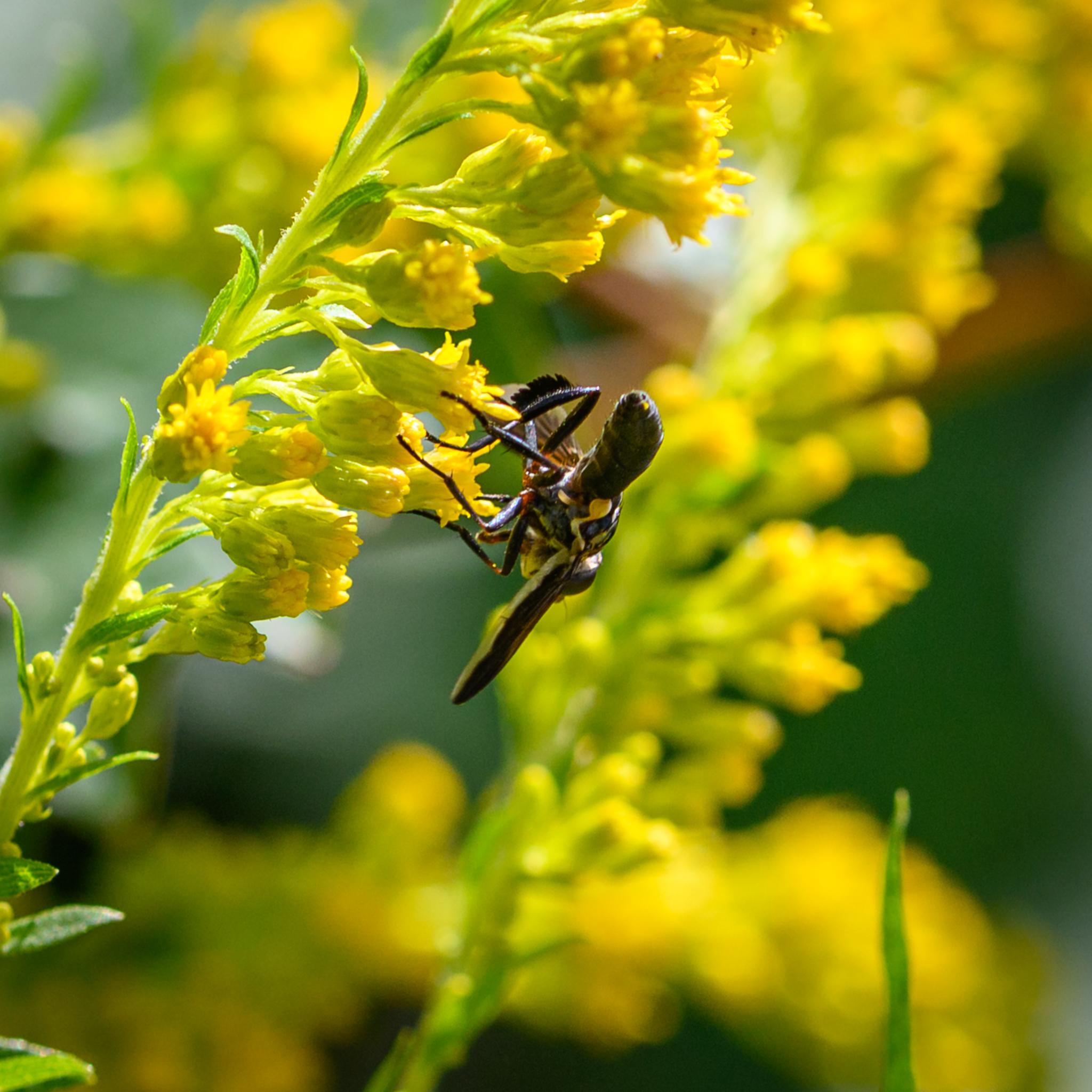
It's a female feather-legged fly, Trichopoda pictipennis, an invasive species from the Neotropics.

🏰
📷️️️️️️️️️️️️️️️️️️️️️️️️️️️️️️️️️️️️️️️️️️️️️️️️️️️️️️️️️️️️️️️️️️️️️️️️️️️️️️️️️️️️️️️️️️️️️️️️️️️️️️️️️️️️️️️️️️️️️️️️️️️️️️️️️️️️️️️️️️️️️️️️️️️️️️️️️️
🐞
🔬
🪰
🪲

A small fly seen from above, the side, and in front, on some yellow goldenrod flowers. The fly has large dark brown-red compound eyes set in a light coloured face with a dark strip down the middle. The antennae are dark. The thorax and abdomen are predominantly black, but with two main longitudinal golden stripes on the pre-sutural part of the thorax, a much smaller one between, and a lateral golden stripe along the suture. There are some narrower and fainter golden stripes on the post-sutural part. The abdomen is mostly black, but becoming grey towards the end. The fly has very large yellow halteres. The wings are also mostly black, with a clear strip towards the back, and an elongated golden patch towards the front. The legs are dark black-brown and the hind legs are notable for the "feathers" protruding backwards from the tibia. The same fly seen more face on, showing the large compound eyes and the white parts around it, down to the clypeus. The underside of the wings and the feathered hind tibia are seen well. A side on view showing that the fly's legs are long, with the body perched above. The abdomen is arched, and more grey can be seen on the underside. A view from the rear and underneath, again showing the feathered hind tibia, and a yellow spot near the tapered end of the abdomen that is probably pollen.

#photography #macrophotography #bugoftheday #heidelberg #insectsofmastodon #backgardenentomology

20

Caricamento...

1
10

Caricamento...

Commenti (1)

Species in genus Trichopoda from the tropical regions of the Americas, especially T. pennipes, are parasites on shield bugs, including Nezara viridula, which I have in the garden.

So they were introduced in various countries for pest control.

However, it appears that T. pictipennis arrived by mistake in Italy in the 1980s, & has been spreading north, often misidentified as T. pennipes.

They're rare in Germany, but are found along the Upper Rhine plain, famous as one of its warmer regions.

0