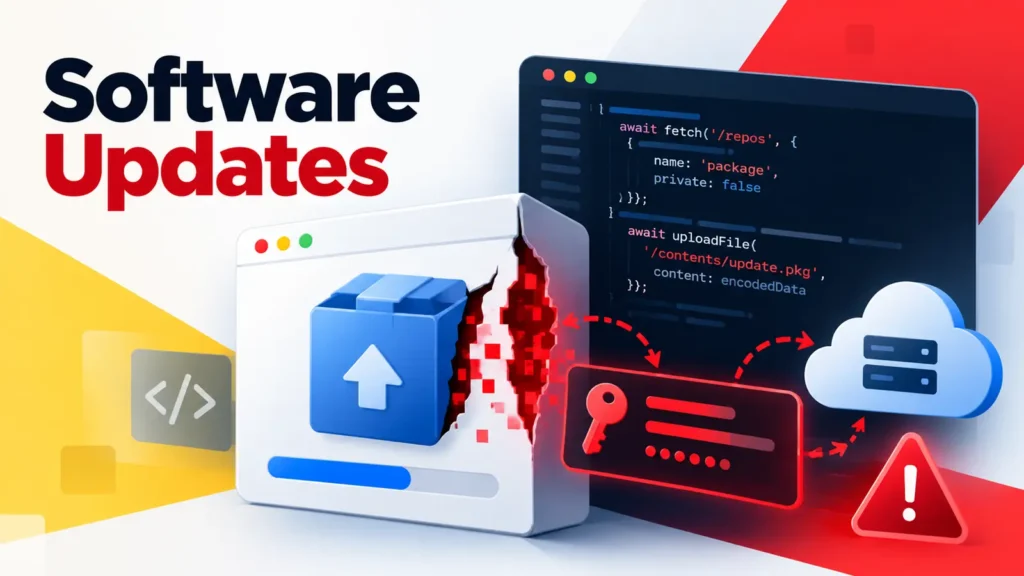
Vai al contenuto principale

#softwaresupplychain

Docker Hub Token Transfer Flaw Exposed Trusted Images to Impersonation Risk

Read Time:3 Minute, 51 Second

Docker has disclosed a critical Docker Hub vulnerability that could let an attacker imper

Altro...

Read Time:3 Minute, 51 Second

Docker has disclosed a critical Docker Hub vulnerability that could let an attacker impersonate another registry user and publish container images under trusted repository names. The flaw, CVE-2026-105445, stemmed from how personal access tokens were handled when a personal account was converted into an organization.

Docker deployed a production fix on September 30, 2026 and says its investigation found no evidence that the weakness was exploited. Even without confirmed abuse, the possible outcome was serious: a malicious image pushed through an apparently legitimate identity could reach build pipelines and downstream users that trust that repository.

Token ownership changed without the secret changingDocker Hub lets a user convert a personal account into an organization while preserving repository names. During the process, the user selects an existing account to become the new organization’s owner. Beginning August 26, 2024, the conversion also transferred the original account’s personal access tokens, or PATs, to that owner.

The platform changed the ownership record but did not rotate or revoke the underlying token secret. The selected owner was not required to approve the transfer and did not receive a notification. That mismatch created an impersonation path: an attacker could create an account and PAT, convert the account into an organization, and assign an intended victim as owner. The attacker still possessed the secret, but Docker Hub now associated it with the victim.

Registry requests made with the token could then authenticate as the target user. Depending on the token scope and that user’s permissions, the attacker might pull, push or delete images in personal repositories and organizations to which the victim had access.

Serious registry impact, but not full account takeoverThe vulnerability affected registry operations rather than the Docker Hub website. It did not let an attacker change the victim’s password, email address or multifactor authentication settings. The practical reach depended on the transferred token’s scope and the permissions attached to the identity it acquired.

That boundary matters, but it does not eliminate supply-chain risk. Replacing a widely consumed image or publishing a malicious version under a trusted namespace could introduce unexpected code into automated deployments. Teams that pull mutable tags without signature or digest verification would face greater exposure than teams enforcing provenance controls.

Docker’s investigation and remediationResearchers Peter Molnar and Krisztian Hozak of mptrdev.com reported the problem through Docker’s vulnerability disclosure program. Docker says it reproduced the issue with test accounts and released a fix in under four hours. The exposure window ran from August 26, 2024 until approximately 19:10 UTC on September 30, 2026.

The company reviewed account conversions across that period and examined registry authentication, token records and usage. Around 304,000 image pushes used transferred tokens, but Docker says all went to repositories owned by the converted organization or its new owner. Its review of higher-risk public images found no signs of malware, cryptomining, credential theft, persistence or tampering.

Because logs record token use rather than every existing token, Docker treated all transferred PATs as potentially affected. It notified exposed users and organization owners on October 2, then deactivated transferred tokens on October 8 unless an owner asked to retain one. Account conversion no longer transfers PATs, and Docker is adding owner consent, notifications and stronger records around ownership changes.

Steps Docker Hub users should takeReview personal access tokens and revoke any that are unfamiliar, unused or broader than necessary.

Use organization access tokens for organizational automation instead of tying critical workflows to personal identities.

Audit image publishing history, repository permissions and recent changes to important tags.

Pin production dependencies by digest where practical and verify image signatures or provenance.

Rebuild credentials in CI/CD systems when a token may have been transferred or exposed.

Docker says users who did not receive a notification were not exposed and need no incident-specific action. General credential hygiene and image verification are still worthwhile because they reduce the effect of future registry or publisher compromises.

A design lesson for automated platformsCVE-2026-105445 was not a stolen-password bug. It was a lifecycle failure: a credential secret survived while the identity bound to it changed. Platforms that support account conversion, mergers or ownership transfer should invalidate credentials by default, require consent from the receiving owner, and create an auditable record of the change.

Cyber Security News reports that Docker found no malicious use after a broad review. That outcome is encouraging, but the flaw remains a useful warning for software supply chains: trusted names are not enough. Strong token governance, immutable references and verifiable provenance provide the additional assurance needed when registry identity controls fail.
#docker #softwaresupplychain #containersecurity #cve2026105445

0

Caricamento...

0
0

Caricamento...

Trojanized Terraform Provider Delivers Cross-Platform Backdoors to Developers

Read Time:3 Minute, 42 Second

A supply-chain campaign is abusing the trust placed in Terraform providers to compromise

Altro...

Read Time:3 Minute, 42 Second

A supply-chain campaign is abusing the trust placed in Terraform providers to compromise developer computers and CI/CD systems across macOS, Linux and Windows. The attackers distribute a trojanized plugin that resembles an AWS provider and retains working provider functionality, while executing a hidden infection chain as soon as Terraform loads it.

Zscaler ThreatLabz identified the activity in July 2026. Its targeting and methods overlap with operations associated with TraderTraitor, also known as Jade Sleet and by several other industry names, but researchers said the available code and infrastructure evidence was insufficient for a high-confidence attribution.

A functional provider conceals the loaderThe initial Go binary is named terraform-provider-awsbeta_v1.0.0. A plausible structure helps it survive a quick inspection and behave as a victim expects. A malicious package runs alongside that functionality, checks the temporary directory for a session.lock file and downloads a Bash loader when the marker is absent. It then creates the lock to avoid executing the same stage twice.

The loader, called safari_updater, identifies the host operating system and processor architecture before choosing a compatible payload. Besides native macOS and Linux targets, it supports Windows machines with Unix-like environments such as Cygwin, MinGW or MSYS.

Payloads are disguised as WOFF web fonts. The files contain decoy font data followed by a marker and an encrypted executable. The script separates the hidden section, decodes it from Base64 and decrypts it with AES-256-CBC, using whichever supported utility—such as Python, Node.js, Perl or OpenSSL—is available. On macOS, it removes the quarantine attribute and applies an ad hoc signature to reduce normal execution friction.

FLATROOF steals data and opens remote accessThe delivered FLATROOF backdoor is written in Rust and supports all three major desktop operating systems. It gathers system information, lists processes, manages files, runs commands, transfers additional payloads and can remove itself. Persistence differs by platform, using mechanisms such as a Linux service, a macOS logout configuration or a Windows Registry Run entry.

Companion Python stealers search Chromium and Firefox profiles for passwords, cookies, browsing history and autofill content. They also gather shell history, usernames, installed applications and process details. Platform-specific collection extends to Safari and the macOS login keychain, as well as Windows Credential Manager, command history and browser wallet extensions including MetaMask, Phantom, Trust Wallet and Rabby.

The operation can also install ROOFDECK on Windows and macOS. This backdoor provides broader remote-control functions, including command execution, clipboard access, file and disk discovery, transfers, background-job management and self-update. It can discover its command server from a local configuration, a cryptographically signed Pastebin entry or Nostr profile metadata, giving the operator alternative control channels.

Why infrastructure tooling is an attractive lureTerraform providers are executable components, not passive configuration. Developers and build systems run them in environments that often have cloud credentials, repository access, deployment permissions and access to production infrastructure. A provider that appears relevant to a job test or new project can therefore bypass a victim’s suspicion while landing near high-value secrets.

The cross-platform design also matches modern engineering teams, where a single project may involve Mac laptops, Linux runners and Windows workstations. Supporting multiple decryption tools increases the odds that the loader succeeds without shipping obvious additional dependencies.

Defenders should verify providers and watch executionTeams should allow only approved provider sources, review names for lookalikes and validate checksums recorded in Terraform lock files. Provider additions and lock-file changes should require peer review, particularly when they arrive through a recruitment exercise, unfamiliar repository or unsolicited collaboration request.

Alert when Terraform processes launch shells or scripting engines unexpectedly.

Investigate WOFF downloads followed by decoding, decryption or execution.

Monitor temporary directories for unfamiliar lock files and loaders.

Block known malicious infrastructure using safely defanged indicators.

Rotate cloud, source-control and wallet credentials after suspected execution.

CI/CD runners should be isolated, ephemeral and granted only the permissions required for each job. Secrets should come from managed stores and expire quickly rather than remaining in environment files or developer browsers. Egress controls can also stop an unapproved provider from reaching arbitrary download and command servers.

This campaign turns a familiar infrastructure workflow into an initial-access mechanism. Treating providers like signed software dependencies—and monitoring what they launch—can prevent the convenience of infrastructure as code from becoming a direct path to developer identities and production cloud environments.

#terraform #softwaresupplychain #developersecurity #flatroof

0

Caricamento...

0
0

Caricamento...

Compromised Tensorlake npm Release Spreads Shai-Hulud Worm Through Developer Systems

Read Time:3 Minute, 7 Second

A compromised release of the Tensorlake package on npm has delivered a new Shai-Hulud worm

Altro...

Read Time:3 Minute, 7 Second

A compromised release of the Tensorlake package on npm has delivered a new Shai-Hulud worm variant designed to steal developer secrets and expand through software supply chains. The malicious version, tensorlake@0.5.144, appeared on October 8 and is particularly concerning because package installation itself triggers the payload.

Tensorlake provides serverless sandboxing for AI agents, and its npm package has accumulated more than 100,000 lifetime installs. That figure does not reveal how many systems installed the malicious build, but it illustrates the trust and potential reach associated with the package. Researchers at Aikido reported no evidence that Tensorlake’s PyPI or Cargo distributions were affected at the time of their analysis.

A Preinstall Script Starts the InfectionThe malicious chain begins with a package preinstall command that launches node lib/setup.mjs. The obscured loader downloads the legitimate Bun JavaScript runtime and uses it to execute a second file, lib/Math_Symbol.js, containing the primary payload. Using a newly fetched runtime may help the activity avoid controls focused on conventional Node.js execution.

Aikido traced the malicious files to a verified commit made with a maintainer identity on October 7. The payload was added through a direct file upload and remained in the repository for roughly 20 hours before the tainted npm version was released. Researchers found a distinctive WORMTAG marker and assessed the incident as a fresh Tensorlake compromise rather than an accidental repeat of a previous infection wave.

Once active, the malware searches broadly for useful credentials. Targets include environment variables, SSH material, cloud configuration, Docker and Kubernetes credentials, Vault tokens, CI/CD secrets, GitHub data, and local browser profiles. It also inspects extension databases associated with numerous cryptocurrency wallets, suggesting both supply-chain expansion and direct financial theft are objectives.

Blockchain Data Provides a Backup Control ChannelThe payload contains the hardcoded domain iseekaigogo[.]com for command and exfiltration traffic. It can also query an attacker-controlled Ethereum smart contract through public RPC services to obtain a replacement destination. At the time of the report, the contract returned the same domain, but the mechanism would allow the operator to redirect infected hosts without publishing another package.

The malware also reportedly contains destructive behavior tied to an embedded GitHub token. If that token is revoked, a dead-man’s switch may wipe infected machines. This creates a response dilemma: credentials need rapid rotation, yet hasty action on the compromised host could destroy evidence or data. Isolation and evidence preservation should therefore precede remediation where possible.

Installed Version 0.5.144 Requires Incident ResponseAny workstation, build runner, or server that installed tensorlake@0.5.144 should be treated as fully compromised. Simply removing the dependency is insufficient because secrets may already have been copied and publishing credentials could have enabled unauthorized changes elsewhere.

Disconnect affected systems while preserving volatile and disk evidence.

From a known-clean device, rotate npm, GitHub, cloud, CI/CD, SSH, Vault, browser, and wallet credentials.

Review package publication records, repository commits, workflow changes, and downstream releases.

Hunt for the two malicious files, unexpected Bun downloads, the command domain, and the reported Ethereum contract.

Restore a trusted lockfile and rebuild affected environments rather than assuming local cleanup is complete.

Longer-term controls should include pinned dependency versions, short-lived credentials, tightly scoped publishing tokens, protected release workflows, and approval gates for package publication. Organizations should also monitor install-time scripts and outbound connections from build systems. Trusted dependency mirrors can add a useful review point before a newly published version reaches production pipelines. This incident shows why developer infrastructure deserves the same containment, credential hygiene, and telemetry as production: one stolen maintainer identity can convert a trusted dependency into an attack path reaching many unrelated environments.

#npm #softwaresupplychain #shaihulud #tensorlake

0

Caricamento...

0
0

Caricamento...

Inside the Supply Chain Playbook Turning Trusted Software Updates Into Credential Thieves

Read Time:3 Minute, 55 Second

A new analysis from threat intelligence firm ReversingLabs, shared with Cyber Security Ne

Altro...

Read Time:3 Minute, 55 Second

A new analysis from threat intelligence firm ReversingLabs, shared with Cyber Security News, pulls together three separate software supply chain incidents — S1ngularity, Shai-Hulud, and activity linked to a group tracked as TeamPCP — into a single picture of how attackers are turning the ordinary mechanics of software distribution into a credential-harvesting machine. The common thread: once an attacker gets hold of a single maintainer token or slips into an automated release pipeline, they can push malicious code through an update channel that developers and their security tools already implicitly trust.

The report, published September 30, 2026, argues that the danger isn’t confined to any one language ecosystem or vendor. Stolen GitHub tokens, npm publishing credentials, cloud API keys, and SSH keys can each become the opening move in a chain reaction — and in several of the documented cases, credentials stolen from one victim were reused to poison the next release down the line.

S1ngularity: When an AI Assistant Becomes the Attacker’s Search ToolThe S1ngularity campaign, which ReversingLabs dates to August 26, 2025, began when attackers used a crafted pull request against the Nx build tool’s repository to obtain a publishing token and swap in a malicious CI script, ultimately triggering a legitimate-looking publish of infected packages. Once installed on a developer’s machine, those packages ran post-install hooks designed to hunt down tokens, credentials, and SSH keys — then used any GitHub credentials they found on the host to spin up public repositories as a convenient exfiltration channel.

What set the campaign apart was a more unusual twist: the malicious code reportedly issued prompts to local AI coding assistants already installed on the victim’s machine, instructing them to search the file system for likely credential locations such as GitHub and npm tokens, cloud secrets, and SSH keys. In effect, the attackers tried to recruit the developer’s own AI tooling as an unwitting reconnaissance assistant — a technique that goes well beyond a conventional credential stealer. In the aftermath, Nx moved to a trusted-publisher model built on short-lived, per-run credentials specifically to reduce how much damage a single stolen token can do going forward.

Shai-Hulud: A Worm That Spreads Through Trust ItselfWhere S1ngularity relied on a one-time pull-request trick, the Shai-Hulud campaign built self-propagation directly into its design. The worm scanned compromised systems for npm publishing credentials, used whatever it found to identify which packages a given victim had permission to publish, and then quietly inserted malicious code into those packages’ next releases. That approach let it spread from project to project without needing to find a fresh software vulnerability at each stop — the compromised credentials themselves did all the work.

TeamPCP and the Trivy Incident: Recycling a BreachThe report also details how a group associated with or possibly overlapping with TeamPCP exploited an earlier breach of the Trivy vulnerability scanner project. A privileged token had been extracted back in February 2026, but an incomplete credential rotation left a residual path open, which attackers used in March to push a malicious update through an automated release system by manipulating version tags relied on by CI/CD workflows. The payload specifically targeted secrets inside running workflow environments, where automation pipelines tend to concentrate valuable credentials in one place.

From there, the group reportedly used npm tokens harvested through the Trivy compromise to distribute a further piece of malware dubbed CanisterWorm, which went on to compromise more than 60 separate npm packages. Downstream, organizations including Checkmarx, LiteLLM, and Telnyx were also caught up in the fallout — a chain that illustrates how a single stolen credential can ripple outward across unrelated companies with no direct relationship to the original breach.

Shoring Up the Software Supply ChainReversingLabs frames a successful supply chain compromise as something closer to a full credential breach than a single tainted package, and recommends organizations respond accordingly. Practical steps include:

Replace long-lived publishing secrets with short-lived, per-run credentials wherever release tooling supports it.

Scope API and publishing tokens as tightly as possible rather than granting broad, standing access.

Pin CI/CD pipeline dependencies to specific, reviewed commits instead of trusting mutable tags.

Monitor repository and package-publishing activity for anomalies, such as releases that don’t correspond to a known code change.

Rotate any token or credential that may have touched an affected build pipeline, and audit for repositories, workflows, or package versions the team didn’t create.

The throughline across all three incidents is that attackers are no longer just looking to plant malware on an endpoint — they’re trying to compromise the publishing process itself, so their code arrives wearing the reputation of a package or vendor the victim already trusts.

#credentialtheft #githubactions #npmsupplychain #softwaresupplychain

0

Caricamento...

0
0

Caricamento...

Die XZ-Backdoor: Ein Albtraum, der die Open-Source-Welt wachrüttelte
Ende März 2024 hielt die Tech-Welt den Atem an. Ein Microsoft-Entwickler, Andres

Altro...

Die XZ-Backdoor: Ein Albtraum, der die Open-Source-Welt wachrüttelte
Ende März 2024 hielt die Tech-Welt den Atem an. Ein Microsoft-Entwickler, Andres Freund, entdeckte durch Zufall eine der raffiniertesten und potenziell verheerendsten Backdoors, die je in einer kritischen Open-Source-Komponente gefunden wurden. Der Zielort: xz, ein unscheinbares, aber weit verbreitetes Komprimierungswerkzeug, das auf fast jedem Linux- und macOS-System zu finden ist. Der Vorfall, bekannt als CVE-2024-3094, war kein einfacher Programmierfehler. Es war das Ergebnis einer jahrelangen, geduldigen Social-Engineering-Kampagne, die darauf abzielte, die Kontrolle über ein grundlegendes Stück der globalen Software-Infrastruktur zu erlangen.

Dieser Vorfall ist mehr als nur eine technische Panne. Er ist ein Weckruf. Er zwingt uns, grundlegende Fragen über Vertrauen, Sicherheit und die Nachhaltigkeit des Open-Source-Ökosystems zu stellen. In diesem Artikel tauchen wir tief in die Anatomie der XZ-Backdoor ein, analysieren die weitreichenden Folgen für die Software-Lieferkette und diskutieren, welche Lehren wir daraus ziehen müssen, um zukünftige Katastrophen zu verhindern.

Was genau ist passiert? Der XZ-Vorfall im Detail
Um das Ausmaß des Vorfalls zu verstehen, müssen wir die Ereignisse Schritt für Schritt nachvollziehen. Es ist eine Geschichte, die sich wie ein Cyber-Thriller liest, aber bittere Realität ist.

Die Entdeckung: Ein aufmerksamer Entwickler schlägt Alarm
Die Geschichte beginnt nicht in einem hochmodernen Security Operations Center (SOC), sondern am Schreibtisch von Andres Freund. Bei der Untersuchung von Performance-Problemen mit SSH-Logins auf einem Debian-Testsystem bemerkte er eine ungewöhnliche CPU-Auslastung und eine Verzögerung von etwa 500 Millisekunden. Anstatt dies als belanglose Anomalie abzutun, grub er tiefer. Seine akribische Untersuchung führte ihn schließlich zu den liblzma-Bibliotheken, die Teil des xz-Pakets sind. Er entdeckte, dass manipulierte Testdateien im Quellcode eine hochkomplexe Backdoor aktivierten, die bei der Systemstart-Initialisierung in den sshd-Prozess (Secure Shell Daemon) injiziert wurde.

Hätte Freund diese kleine Anomalie ignoriert, wäre die Backdoor unentdeckt in die stabilen Versionen großer Linux-Distributionen wie Debian und Red Hat gelangt und hätte potenziell Millionen von Servern weltweit kompromittiert.

Die Komplexität der Backdoor: Mehr als nur ein einfacher Bug
Die Backdoor war ein Meisterwerk der Tarnung und Komplexität. Sie war nicht direkt im sichtbaren Quellcode platziert, sondern in obfuskierten (verschleierten) Binärdateien, die als Testdateien getarnt waren. Ein manipuliertes Build-Skript extrahierte und kompilierte diesen schädlichen Code nur unter sehr spezifischen Bedingungen während des Paketierungsprozesses.

Das ultimative Ziel war es, den Authentifizierungsprozess von SSH, dem Rückgrat der Fernadministration von Servern, zu manipulieren. Die Backdoor hätte es Angreifern, die im Besitz eines bestimmten privaten Schlüssels sind, ermöglicht, die Authentifizierung zu umgehen und vollständigen Root-Zugriff auf jedes betroffene System zu erlangen – und das völlig unsichtbar und ohne Spuren in den Logdateien zu hinterlassen. Eine Katastrophe für die globale IT-Infrastruktur wurde in letzter Sekunde abgewendet.

Der Vektor: Social Engineering und der Druck auf Maintainer
Der technische Aspekt ist nur die eine Hälfte der Geschichte. Die andere, vielleicht noch beunruhigendere, ist die menschliche. Die Backdoor wurde von einem Akteur mit dem Pseudonym „Jia Tan“ eingeschleust. Diese Person hatte sich über zwei Jahre hinweg das Vertrauen des ursprünglichen, überarbeiteten Maintainers von XZ Utils erschlichen.

„Jia Tan“ begann mit harmlosen Beiträgen, baute langsam einen Ruf als hilfsbereiter Entwickler auf und übernahm nach und nach mehr Verantwortung. Gleichzeitig übten andere, mutmaßlich zum selben Angreifer gehörende Accounts, Druck auf den ursprünglichen Maintainer aus, er solle die Entwicklung an „Jia Tan“ übergeben, da er selbst zu langsam sei. Dieser psychologische Druck, kombiniert mit dem typischen Burnout vieler unterbezahlter oder unbezahlter Open-Source-Entwickler, schuf die perfekte Einfallschneise.

Die weitreichenden Folgen: Ein Beben in der Tech-Welt
Der XZ-Vorfall hat Risse im Fundament der modernen Softwareentwicklung offengelegt. Die Auswirkungen gehen weit über eine einzelne Bibliothek hinaus.

Vertrauenskrise in Open Source?
Das Open-Source-Modell basiert auf Transparenz und Vertrauen – „many eyes make all bugs shallow“ (viele Augen machen alle Fehler offensichtlich). Dieser Vorfall stellt dieses Prinzip in Frage. Wenn ein Angreifer über Jahre hinweg unbemerkt eine derart komplexe Backdoor platzieren kann, wie sicher sind dann die unzähligen anderen Open-Source-Komponenten, aus denen unsere digitale Welt besteht? Es ist keine Vertrauenskrise, die Open Source zerstört, aber sie erzwingt eine Neubewertung des naiven Vertrauens in unüberprüften Code und anonyme Beitragende.

Die Achillesferse: Die Software-Lieferkette (Software Supply Chain)
Moderne Software wird nicht mehr monolithisch geschrieben, sondern aus Hunderten oder Tausenden von Open-Source-Abhängigkeiten zusammengesetzt. Jede dieser Abhängigkeiten ist ein potenzieller Angriffspunkt. Die Kompromittierung von XZ Utils ist ein klassisches Beispiel für einen Angriff auf die Software-Lieferkette (Software Supply Chain Attack). Anstatt ein Unternehmen direkt anzugreifen, kompromittieren Angreifer eine vorgelagerte Komponente, die dann automatisch an unzählige Opfer verteilt wird. Dies macht die Absicherung der Lieferkette zu einer der größten Herausforderungen der Cybersecurity.

Der menschliche Faktor: Burnout bei Open-Source-Entwicklern
Der Vorfall beleuchtet schonungslos die prekäre Situation vieler Maintainer von kritischer Infrastruktur. Ein einziger Entwickler war für ein Projekt verantwortlich, auf das sich die globale Wirtschaft verlässt. Er wurde mit Anfragen, Fehlerberichten und dem Druck, schneller zu arbeiten, überhäuft – ohne Bezahlung oder institutionelle Unterstützung. Dieses Ungleichgewicht zwischen der immensen Bedeutung eines Projekts und den begrenzten Ressourcen seines Betreuers ist eine offene Einladung für böswillige Akteure.

Gezogene Lehren und Lösungsansätze: Wie sichern wir die Zukunft?
Panik ist ein schlechter Ratgeber. Stattdessen müssen wir aus diesem Vorfall lernen und konkrete Maßnahmen ergreifen, um das Ökosystem widerstandsfähiger zu machen.

Mehr Investitionen in kritische Open-Source-Projekte
Unternehmen, die Milliarden mit Software verdienen, die auf kostenloser Open-Source-Arbeit aufbaut, müssen mehr Verantwortung übernehmen. Dies bedeutet finanzielle Unterstützung für kritische Projekte und deren Maintainer, sei es durch direkte Spenden, die Anstellung von Entwicklern zur Arbeit an diesen Projekten oder die Unterstützung von Stiftungen wie der Open Source Security Foundation (OpenSSF).

Technische Absicherung: SBOM, Signaturen und Reproducible Builds
Vertrauen ist gut, Kontrolle ist besser. Technologien zur Absicherung der Lieferkette müssen zum Standard werden:

Software Bill of Materials (SBOM): Eine „Stückliste“ für Software, die jede einzelne Komponente und Abhängigkeit auflistet und so für Transparenz sorgt.

Digitale Signaturen: Beiträge und Releases müssen kryptografisch signiert werden, um ihre Herkunft und Integrität zu gewährleisten.

Reproducible Builds: Der Prozess, bei dem aus Quellcode ein binäres Paket erstellt wird, muss deterministisch sein. Das bedeutet, jeder sollte exakt dasselbe, bit-identische Ergebnis erhalten, was Manipulationen im Build-Prozess aufdeckt.

Verstärkte Sicherheitsaudits und automatisierte Scans
Kritische Komponenten benötigen regelmäßige, unabhängige Sicherheitsaudits. Zusätzlich können automatisierte Werkzeuge zur statischen (SAST) und dynamischen (DAST) Code-Analyse helfen, verdächtige Muster oder bekannte Schwachstellen frühzeitig zu erkennen. Die Komplexität der XZ-Backdoor zeigt jedoch, dass rein automatisierte Scans nicht ausreichen.

Die Rolle von XDR und MDR in der modernen Abwehr
Selbst mit den besten präventiven Maßnahmen kann ein Angriff erfolgreich sein. Hier kommen moderne Endpoint-Sicherheitslösungen ins Spiel. Plattformen für Extended Detection and Response (XDR) und Services für Managed Detection and Response (MDR), wie sie beispielsweise ESET anbietet, sind entscheidend. Sie überwachen nicht nur auf bekannte Signaturen von Malware, sondern analysieren das Verhalten von Systemen in Echtzeit. Die von Andres Freund entdeckte CPU-Anomalie und die verdächtigen Prozessinteraktionen wären genau die Art von Signalen, die eine fortschrittliche XDR/MDR-Lösung als verdächtig markieren und Sicherheitsexperten zur Untersuchung alarmieren würde – selbst wenn die zugrundeliegende Backdoor noch völlig unbekannt ist. Sie bieten eine letzte Verteidigungslinie, wenn die vorgelagerten Schutzmaßnahmen versagen.

Fazit: Ein Weckruf, kein Todesurteil für Open Source
Die XZ-Backdoor war ein Schuss vor den Bug von monumentalen Ausmaßen. Sie hat uns auf die harte Tour gelehrt, dass unsere globale digitale Infrastruktur auf einem Fundament ruht, das an manchen Stellen brüchiger ist, als wir dachten. Der Vorfall hat systemische Schwächen in der Software-Lieferkette, im Umgang mit Open-Source-Maintainern und in unseren Vertrauensmodellen aufgedeckt.

Gleichzeitig hat die Geschichte aber auch die größte Stärke von Open Source gezeigt: die Gemeinschaft. Ein einzelner, aufmerksamer Entwickler hat die Katastrophe verhindert, weil der Prozess offen und die Werkzeuge zugänglich waren.

Die Aufgabe, die nun vor uns liegt, ist eine gemeinschaftliche. Entwickler, Unternehmen und Sicherheitsforscher müssen zusammenarbeiten, um die Lehren aus diesem Vorfall in die Tat umzusetzen. Wir müssen in die Sicherheit unserer digitalen Lieferkette investieren, die Menschen hinter dem Code unterstützen und eine Kultur der gesunden Skepsis und rigorosen Überprüfung etablieren. Der XZ-Vorfall war kein Todesurteil für Open Source, sondern der dringend benötigte Weckruf, um es für die Zukunft sicherer und nachhaltiger zu machen.
Die XZ-Backdoor: Weckruf für die Open-Source-Sicherheit

#cybersecurity #opensource #linux #software #coding #community #engineering #development #inclusive #softwaresupplychain

0

Caricamento...

0
1

Caricamento...