Vai al contenuto principale

#wordpresssecurity

Critical PHP Security Flaws Put Websites at Risk: What Website Owners Need to Know

Two critical security vulnerabilities in PHP, a programming language widely used to power websites, have triggered urgent warnings from cybersecurity

Altro...

Two critical security vulnerabilities in PHP, a programming language widely used to power websites, have triggered urgent warnings from cybersecurity authorities. The flaws could allow attackers to execute malicious code on vulnerable servers without authentication.

The PHP development team released security updates on October 21, 2026, urging users to update immediately.

Why Are the Vulnerabilities Dangerous?PHP runs behind the scenes on many websites, handling tasks such as processing forms, loading content and communicating with databases.

The newly disclosed flaws could allow attackers to run commands on affected servers, potentially exposing sensitive information or compromising websites. Government and cybersecurity agencies have urged organizations to address the vulnerabilities urgently.

Which PHP Versions Are Affected?The PHP team released fixes in these versions:

. PHP 8.5.12

. PHP 8.4.27

. PHP 8.3.36

. PHP 8.2.35

Organizations using older or unsupported versions should consult their hosting provider or software distributor for the appropriate security guidance.

What Should Website Owners Do?Website owners and administrators should identify whether their websites rely on vulnerable PHP installations and apply the relevant security updates as soon as possible.

They should also keep backups, review their hosting provider’s security notices and check that their websites are running supported software.

If an organization cannot apply the fixes immediately, cybersecurity authorities recommend considering temporary isolation of exposed systems until the risk is addressed.

For WordPress.com users: the hosting platform manages the underlying server software, so users generally do not need to update PHP themselves. They should follow official platform security notices and keep their own account and site settings secure.

Can AI Help Find Security Vulnerabilities?The discovery also highlights the growing role of artificial intelligence in cybersecurity. OpenAI reported that AI-assisted research contributed to identifying one of the flaws, while security researchers at Wiz independently discovered and reported both vulnerabilities.

AI can help researchers find weaknesses in widely used software, but the same capabilities may also help attackers develop malicious tools. Timely updates and coordinated security responses remain essential.

The Bottom LineThe PHP vulnerabilities are a reminder that even widely used website technology can contain serious security weaknesses. Applying official security updates promptly is one of the most important steps organizations can take to protect their websites and data.

Sources: PHP official security advisory, NSA, ENISA and Reuters reporting, October 21, 2026.

AI and CybersecurityArtificial intelligence is becoming an important tool in cybersecurity. AI-assisted research can help security experts identify software vulnerabilitiesand improve website protection.

Cookie PolicyTerms of Use. Disclaimer

About UsContact Us. Terms & Conditions

Privacy Policy

PHP security update protecting a website server from vulnerabilities Cybersecurity protection for PHP websites and server data

#cybersecurity #wordpresssecurity #websitesecurity #phpsecurity #aicybersecurity #softwarevulnerability

0

Caricamento...

0
6

Caricamento...

Stolen UpdraftCentral Keys Let Attackers Backdoor WordPress Sites

Read Time:3 Minute, 8 Second

A compromise of TeamUpdraft’s website turned legitimate remote-management credentials into

Altro...

Read Time:3 Minute, 8 Second

A compromise of TeamUpdraft’s website turned legitimate remote-management credentials into a delivery mechanism for malicious WordPress plugins. The incident affects customers whose sites were connected to the vendor’s UpdraftCentral service, and it shows how a trusted administration channel can become an attacker’s shortcut around ordinary authentication controls.

TeamUpdraft, which develops the widely used UpdraftPlus backup plugin, detected unauthorized access to teamupdraft.com during October 17 and 18, 2026. The company says intruders may have reached customer records containing names, email addresses, billing and order information, password hashes, two-factor authentication settings, and service connection keys. Payment card details were not stored by TeamUpdraft because Stripe and PayPal processed payments.

Trusted keys became the attack pathUpdraftCentral allows administrators to control multiple WordPress installations through a single dashboard. A connected site accepts commands signed with the dashboard’s private key and executes them with the privileges of the WordPress user who established that connection. Once attackers obtained valid keys, they did not need to defeat the normal signature checks.

Researchers at Nethemba observed malicious requests using the plugin.upload_plugin command. If the account linked to UpdraftCentral could install and activate plugins, WordPress accepted the instruction and loaded attacker-controlled PHP. On one examined site, the attempt failed only because the linked user lacked sufficient permissions.

The activity is distinct from an exploitation of CVE-2026-10795, an earlier UpdraftPlus vulnerability. Investigated sites were already running version 2.26.11; the attackers instead relied on secrets taken from the vendor environment. TeamUpdraft also says its official plugin packages were not modified, separating this event from a conventional poisoned-update attack.

Backdoors may remain after key rotationInvestigators found plugins masquerading as maintenance utilities. Functional versions could sign an attacker into an existing administrator account or create a new one, while some concealed themselves from the standard plugin list. Other, broken variants generated PHP errors and caused outages. As a result, a clean-looking dashboard is not enough to establish that a site was untouched.

Exposure is tied to affected cloud UpdraftCentral connections, not simply to having UpdraftPlus installed. Both free and premium customers may nevertheless have forgotten connections because linking a TeamUpdraft account can include an option to enroll the site in UpdraftCentral. Self-hosted UpdraftCentral deployments and backups stored directly in customer-controlled Google Drive, Dropbox, or Amazon S3 accounts were not included in the vendor’s stated breach scope.

What WordPress administrators should doTeamUpdraft has closed the access route, logged customers out, rotated service credentials and notified authorities. Site owners still need to address both the stolen keys and anything those keys may already have installed.

Update to UpdraftPlus 1.26.13 Free, 2.26.13 Premium, or a later release.

Open Settings > UpdraftPlus > Advanced Tools > UpdraftCentral and remove obsolete connection keys manually.

Inspect administrator accounts, plugin files, web-server logs and recent PHP changes for unauthorized activity.

Change TeamUpdraft and WordPress administrator passwords, replace any reused credentials, and reset two-factor authentication.

Renew cloud-storage access before reconnecting services, especially where UpdraftCentral previously had access.

An update or deleted key prevents future use of that credential but does not remove a backdoor already written to disk. If evidence of intrusion appears, preserve logs and forensic artifacts before cleanup. TeamUpdraft recommends considering restoration from a known-good backup made before October 17, followed by a full credential reset and careful validation before the site returns to normal operation.

The larger lesson is that remote administration deserves the same monitoring as privileged local access. Organizations should inventory management connections, grant the linked account only the permissions it needs, and alert on unexpected plugin installation. Trusted automation reduces workload, but its keys become high-value credentials that require tight lifecycle controls.

#supplychainattack #wordpresssecurity #websitesecurity #updraftplus

0

Caricamento...

0
0

Caricamento...

WP2Shell Chains WordPress Flaws Into Unauthenticated Server Takeover

Read Time:3 Minute, 15 Second

A newly documented attack chain named WP2Shell combines two WordPress Core vulnerabilitie

Altro...

Read Time:3 Minute, 15 Second

A newly documented attack chain named WP2Shell combines two WordPress Core vulnerabilities to move from an unauthenticated web request to administrator access and server-side code execution. The technique can create a privileged account, upload a plugin containing a web shell and leave attackers with a durable command interface on the underlying host.

Seqrite researchers published their analysis on October 16, detailing how CVE-2026-63030 and CVE-2026-60137 reinforce each other. Their work demonstrates a serious path against unpatched sites, although it does not establish widespread exploitation in the wild.

Two flaws create one dangerous pathCVE-2026-63030 affects the WordPress REST API batch controller at /wp-json/batch/v1, which is designed to process several API operations in one submission. According to the research, specially nested requests can confuse route handling and reach behavior that should require authentication. This issue provides access to the next vulnerable code path but does not directly execute commands on its own.

CVE-2026-60137 is an SQL injection weakness in the posts endpoint. The public author_exclude parameter maps to author__not_in in WP_Query, where insufficient input handling can alter a database query. Chained through the route flaw, an external attacker can reach this condition without first signing in.

The combined proof of concept turns database access into an administrator-level foothold and then code execution. The distinction matters for defensive analysis: neither vulnerability should be simplified as a standalone web shell. The takeover is possible because the authentication bypass path exposes the injection weakness and the resulting privileges enable plugin installation.

What the attack leaves behindSeqrite’s demonstrated sequence creates an unexpected administrator, stages a ZIP file beneath the uploads directory, extracts PHP content through the upgrade area and moves a generated plugin into wp-content/plugins. The plugin then acts as a web shell that can execute operating-system commands.

Useful indicators include temporary files matching temp-write-test-*, archives such as wp2shell_4e9b3641.zip, directories named wp2shell_, and similarly named PHP files. Defenders should also review traffic to the batch endpoint and look for new administrators whose creation time does not match a legitimate change.

Web-server processes may legitimately write files during plugin installation, so a process such as httpd.exe touching WordPress directories is not proof by itself. Stronger evidence comes from the distinctive naming patterns, an unusual request sequence, unauthorized accounts and PHP files that do not match an approved plugin release.

Affected releases and defensive stepsThe report lists WordPress 6.9.0 through 6.9.4 and 7.0.0 through 7.0.1 as vulnerable to the complete chain. Versions 6.8.0 through 6.8.5 are affected by the SQL injection component. WordPress 6.8.6, 6.9.5 and 7.0.2 are identified as fixed versions; later supported releases should also contain the corrections.

Upgrade to the appropriate fixed branch or a later supported WordPress release and confirm the update completed.

Search access logs for suspicious nested requests to /wp-json/batch/v1.

Review administrator accounts and investigate any unexplained additions.

Compare plugin, cache, uploads and upgrade directories with known-good baselines.

Hunt for WP2Shell filename patterns and newly written PHP files.

Restricting unauthenticated access to sensitive REST functionality may reduce exposure in some environments, but it is not a replacement for patching. Internet-facing sites behind managed hosting or an edge security service should still verify the actual WordPress Core version rather than assuming the provider applied the update.

If indicators are present, preserve logs and filesystem evidence before removing artifacts. Disable malicious plugins, rotate WordPress and infrastructure credentials, and investigate for persistence outside the web root. A site that now reports a patched version may still contain accounts or code installed before the upgrade, so remediation must address both the original vulnerabilities and the consequences of earlier access.

#wordpresssecurity #webshell #sqlinjection #wp2shell

0

Caricamento...

0
0

Caricamento...

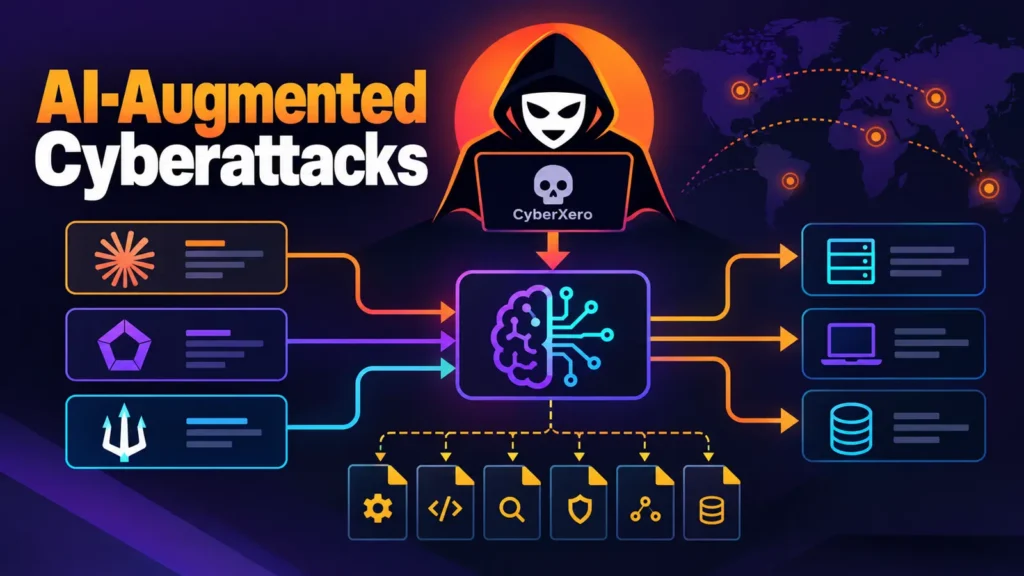
CyberXero Uses AI Agent Swarms to Scale WordPress Intrusions and Target Ukrainian Energy

Read Time:3 Minute, 27 Second

A Russian-speaking operator tracked as CyberXero has blended commercial AI coding agents

Altro...

Read Time:3 Minute, 27 Second

A Russian-speaking operator tracked as CyberXero has blended commercial AI coding agents with established offensive tools to run both high-volume website attacks and targeted operations against Ukrainian energy organizations. Evidence recovered from an exposed working directory suggests the actor is functioning as an initial-access broker: compromising systems, collecting data and potentially preparing access that could be reused or sold.

Researchers at SOCRadar connected the campaign after discovering more than 90,000 exposed files, including scripts, AI session histories, configuration records and stolen information. The operation reportedly affected more than 40 organizations across several countries and remained active during the investigation.

Two layers of AI-assisted intrusionCyberXero did not use AI only for advice or code snippets. On a primary workstation, the operator configured as many as 51 Claude Code agents with specialized roles covering web discovery, credential testing, exploitation and data collection. A separate environment linked the PentAGI AI penetration-testing framework to a Cobalt Strike team server through an AI provider API.

Recovered settings indicate that models and token budgets were assigned according to the difficulty of each task. Lower-cost roles handled routine searches and software installation, while more capable configurations were reserved for payload generation. This orchestration shows how an individual operator can distribute work across multiple agents and compress activities that once required more manual coordination.

In one automated run, the system scanned 4,708 targets, identified 429 accessible WordPress administration panels and reportedly planted 32 shells in 61 seconds. The figures illustrate the main defensive challenge posed by agentic tooling: it can move from discovery to exploitation across a large target set with very little delay.

Safeguards were tested and sometimes bypassedSession records show the operator presenting malicious tasks as authorized security testing. When an agent refused, CyberXero sometimes opened a fresh session and reused the same prepared explanation. Other safeguards held, including refusals to install a backdoor, disable a firewall, move laterally and deploy a web shell.

This uneven result matters to both AI providers and enterprise users. A refusal inside one conversation is less valuable if a new session resets the relevant context. It also makes AI session records highly sensitive. Logs can reveal target information, credentials, attack logic and operational infrastructure, so organizations should encrypt them, tightly limit access and preserve reliable audit trails.

Mass compromise met targeted reconnaissanceThe broad pipeline focused on WordPress and e-commerce sites. An internal package called wp2shell used a WordPress REST API batch route as part of a chain that injected SQL, created rogue administrator accounts and installed WSO-family web shells on vulnerable installations. The actor also targeted Magento and exploited a recently disclosed Support Board vulnerability within roughly a month of publication.

A more selective track mapped seven Ukrainian energy and utility entities. Across two organizations, the actor enumerated 95 subdomains and catalogued email, VPN and network-dispatch services. Researchers found file-confirmed theft at four Ukrainian organizations. Data associated with a Kharkiv district-heating provider included 564,073 subscriber records and 213,340 access-log entries, reportedly reached with a hardcoded credential found in the operator’s own tooling.

The investigation also linked eight infrastructure nodes across European hosting providers and Tencent Cloud. Shared artifacts connected mass scanning, staging, Cobalt Strike services and operator workstations. Although researchers did not prove that access had already been sold, the mix of opportunistic compromise and infrastructure-specific reconnaissance creates a credible follow-on risk.

Defensive prioritiesPatch WordPress core, plugins, e-commerce platforms and internet-facing support software promptly.

Search for unfamiliar administrator accounts and plugin paths matching rogue wp2shell-style installations.

Review web logs for rapid REST API batch activity, SQL injection attempts and unexpected shell uploads.

Restrict internet exposure for Redis, rotate embedded credentials and audit authorized SSH keys.

Treat AI-agent histories, configuration files and API tokens as sensitive security assets.

CyberXero’s importance lies less in any single tool than in the workflow connecting them. AI agents, exploitation frameworks and commodity post-compromise tooling can now form a repeatable pipeline. Defenders should expect shorter intervals between vulnerability discovery, scanning and compromise—and tune monitoring and patch operations accordingly.

#wordpresssecurity #aipoweredattacks #cyberxero #ukrainianinfrastructure

0

Caricamento...

0
0

Caricamento...

Leaked Control Panel Exposes 50,000 Stolen Credentials Harvested From WordPress Backups

Read Time:4 Minute, 22 Second

Security researchers at LevelBlue have pulled back the curtain on a credential-harvesting

Altro...

Read Time:4 Minute, 22 Second

Security researchers at LevelBlue have pulled back the curtain on a credential-harvesting toolkit, internally named TIKTOUK, that turns an everyday WordPress mistake — leaving a site backup or configuration file sitting in a publicly reachable location — into a pipeline for stealing cloud and email credentials at scale. A leaked control panel used to run the operation revealed roughly 50,000 real, server-side credentials gathered from about 37,000 domains, including hundreds of AWS access keys that the researchers confirmed were still active.

Rather than relying on one single exploit, TIKTOUK bundles several different collection techniques together: scanning sites for exposed sensitive files, recovering stored passwords from plugin configurations, and scraping secrets out of JavaScript served to ordinary site visitors. LevelBlue says the operation was already running at meaningful scale by the time it was identified through a combination of source code review, reverse engineering, and controlled lab testing.

Inside the Toolkit’s ArchitectureTIKTOUK is built from two Python components plus a Linux-based crawler written in Go, all of which check in with a central HTTP service to receive tasks and report back findings. The coordination layer distributes targets and collects results, though LevelBlue’s testing didn’t find evidence of a fully automatic handoff between the different components — suggesting a human operator may still be steering parts of the operation.

The probing component handles initial reconnaissance: it pulls a list of targets, confirms which ones are running WordPress, and then sends specially crafted REST API batch requests that combine a malformed URL with delete and content-rendering operations. When a request formatted as JSON gets rejected, the tool automatically retries using multipart encoding instead — and that retry frequently succeeds. That specific fallback pattern, LevelBlue notes, gives defenders a distinctive signature to hunt for in their own web server logs.

Turning a Backup File Into a Credential DumpA separate collection module goes after exposed WordPress configuration backups directly, pulling database credentials and WordPress security keys out of them. It doesn’t stop there — the same component also probes for exposed environment files, repository configuration, raw database backups, and debug logs, essentially sweeping up anything left accessible through a plain web request that shouldn’t be.

Some of its database queries are notably methodical: nested batch requests first retrieve the name WordPress uses for its options table, then feed that name into follow-up queries designed to pull the option values themselves. The tool decodes hexadecimal-encoded responses back into readable text and assembles structured records containing database settings, stored email credentials, AWS key pairs, and recognizable API key patterns.

From Website Compromise to Cloud TakeoverThe blast radius extends well past the compromised website itself. The leaked operator panel contained AWS keys with the potential to be abused for sending email, spinning up compute resources, or accessing AI services tied to the victim’s cloud account. TIKTOUK’s collector can specifically decrypt stored settings from popular SMTP plugins — WP Mail SMTP, Easy WP SMTP, and FluentSMTP — recovering plaintext email credentials using encryption keys or configuration material the tool already has access to. LevelBlue is careful to note this isn’t a cryptographic breakthrough; the toolkit simply gets its hands on what it needs to unlock settings that were never meant to be exposed in the first place. In one particularly efficient step, it can even derive an Amazon SES email password directly from a stolen AWS secret key.

A third piece, the JavaScript crawler, fetches site pages and any scripts they load, scanning the contents for credential patterns tied to services like SendGrid, Anthropic, AWS Bedrock, and AWS more broadly — all secrets that were likely embedded in client-side code by mistake and shipped straight to every visitor’s browser.

Exploitation Links and What’s Still UnconfirmedLevelBlue connected TIKTOUK’s request patterns to two specific vulnerabilities, CVE-2026-60137 and CVE-2026-63030, which affect a batch-route mechanism in WordPress versions 6.9.x prior to 6.9.5 and 7.0.x prior to 7.0.2. Importantly, the firm’s lab testing didn’t go as far as demonstrating a full working exploit — controlled test targets returned pre-prepared responses without actually executing attacker-supplied SQL. That said, separate incident telemetry did confirm the toolkit successfully retrieved payloads and communicated with its controller infrastructure in the wild, and investigators separately identified a related Go-based botnet capable of remote command execution.

In short: the lab results establish exactly how the components behave, not that a specific live production site has been fully breached end-to-end using this chain. Site operators shouldn’t read that distinction as reassuring, though, given the scale of credentials already found in the leaked panel.

What WordPress Site Owners Should CheckConfirm backup files, configuration exports, and debug logs are never stored inside a publicly web-accessible directory.

Update WordPress past the affected 6.9.x and 7.0.x ranges identified in the advisory.

Rotate SMTP plugin credentials and any AWS keys that may have been referenced in configuration files or client-side JavaScript.

Watch server logs for the JSON-then-multipart retry pattern on REST batch endpoints as a potential sign of probing activity.

Audit JavaScript served to visitors for hard-coded API keys or secrets that should never have been placed there.

#databreach #aws #credentialtheft #wordpresssecurity

0

Caricamento...

0
0

Caricamento...